Author

admin

Browsing

– James Talarico, a Democratic state lawmaker from Texas with a surging national profile, defeated Rep. Jasmine Crockett, a nationally known politician, progressive firebrand, and vocal critic and foil of President Donald Trump, to win the Democratic Senate primary in Texas, according to the Associated Press.

Talarico, 36, will now try to become the first Democrat in nearly four decades to win a Senate election in Texas, as he faces off against the winner of a bruising Republican primary runoff between longtime incumbent Sen. John Cornyn and Texas Attorney General Ken Paxton.

This year’s Senate showdown in Texas is one of a handful across the country that could determine if Republicans hold their majority in the chamber in the midterm elections. The GOP currently controls the chamber 53-47.

In the final weeks leading up to Tuesday’s Democratic primary, race became a key factor in the showdown between Talarico, a former middle school teacher and Presbyterian seminarian who is considered a rising star among Democrats, and Crockett, a civil rights attorney first elected to Congress in 2022.

Talarico, who is White, was accused a month ago by an influencer of calling former Rep. Colin Allred, a former rival for the 2026 Senate nomination, a ‘mediocre Black man.’ 

Allred, the 2024 Democratic Senate nominee, was making a second straight run after losing two years ago to Republican Sen. Ted Cruz by eight points.

He ended his Senate campaign late last year, just before Crockett announced her candidacy. Allred, a former college football star who played professionally in the NFL and later became a civil rights attorney, is now running for his old House seat.

Morgan Thompson, the influencer who goes by the username @morga_tt on TikTok, in a social media post claimed Talarico told her in a private conversation that he had ‘signed up to run against a mediocre Black man, not a formidable, intelligent, Black woman.’

Pushing back against Thompson’s characterization of their conversation, Talarico said in a statement, ‘In my praise of Congresswoman Crockett, I described Congressman Allred’s method of campaigning as mediocre — but his life and service are not. I would never attack him on the basis of race.’

Allred, responding in a social media video on Monday, said: ‘James, if you want to compliment Black women, just do it. Just do it. Don’t do it while also tearing down a Black man.’

The 44-year-old Crockett, who is Black, said in a statement that Allred ‘drew a line in the sand.’

‘He made it clear that he did not take allegations of an attack on him as simply another day in the neighborhood, but more importantly, his post wasn’t about himself,’ Crockett, who was endorsed by Allred, said. ‘It was a moment that he decided to stand for all people who have been targeted and talked about in a demeaning way as our country continues to be divided.’

A couple of weeks later, Crockett claimed that a Talarico-aligned super PAC had darkened her skin tone in an ad and said it was ‘straight up racist.’

She also argued late last month that talk that she wasn’t electable statewide was a ‘dog whistle’ that was ‘tearing down a Black woman,’ and that she was the ‘most qualified’ candidate.

Talarico, who was first elected to the Texas House in 2018 by flipping a red district in northeast Austin and surrounding suburbs, highlighted his ability to win over Republican voters. And he questioned whether Crockett could run a competitive general election campaign.

While dramatically outraising and outspending Crockett the past two months, Talarico cast himself as the underdog in the primary battle against the better-known congresswoman.

Talarico, who speaks openly about his faith and how it shapes his progressive policy agenda, last year started garnering national attention through a slew of social media appearances that went viral. Also boosting his profile were his TikTok videos, which have grabbed millions of views, and his appearance last July on Joe Rogan’s top-rated podcast.

Rogan suggested during the interview that Talarico should run for president.

A month later, Talarico was a regular on the cable news networks, conducting dozens of national media interviews, as he and dozens of his fellow Democrats in the Texas House fled the state for weeks, to delay the eventual Trump-led redistricting push in Texas to create up to five more right-leaning congressional seats

Talarico launched his Senate campaign a month later, in September.

Last month, Talarcio grabbed even more national attention when his appearance on ‘The Late Show with Stephen Colbert’ was bumped off broadcast TV and instead appeared on YouTube. Colbert accused his network, CBS, of blocking the interview by citing guidelines from the Federal Communications Commission (FCC).

The controversy appeared to boost Talarico, with his campaign saying they hauled in $2.5 million in fundraising in the 24 hours ‘following his censored’ interview.

Related Article

Polls close in Texas, North Carolina and Arkansas as high-stakes midterm primaries enter counting phase
This post appeared first on FOX NEWS

Iran is waging a mass drone campaign across the Middle East, unleashing waves of low-cost, one-way attack drones also known as unmanned aerial vehicles (UAVs), against Western-linked targets to impose ‘exponential cost on the U.S.,’ a defense expert has warned.

As Tehran reportedly launched thousands of Shahed drones across the region and Iranian state media shared footage of underground stockpiles, Cameron Chell, CEO of drone maker and tech company Draganfly, said Iran’s strategy is designed to force high-end defenses to counter cheap aerial threats.

‘Even a hundred of these drones in the hands of a decentralized unit can cause terror in a neighboring state like never before imagined,’ Chell told Fox News Digital. ‘The Iranians cannot win the war with these drones, but like the [communist] Viet Cong [during the Vietnam War], they have an asymmetric capability that can prolong this war and create political pressure.’

‘Iran can drive terror in unimaginable ways and drive exponential costs on the U.S. side, having to target these small, very hard-to-detect drone units,’ he added.

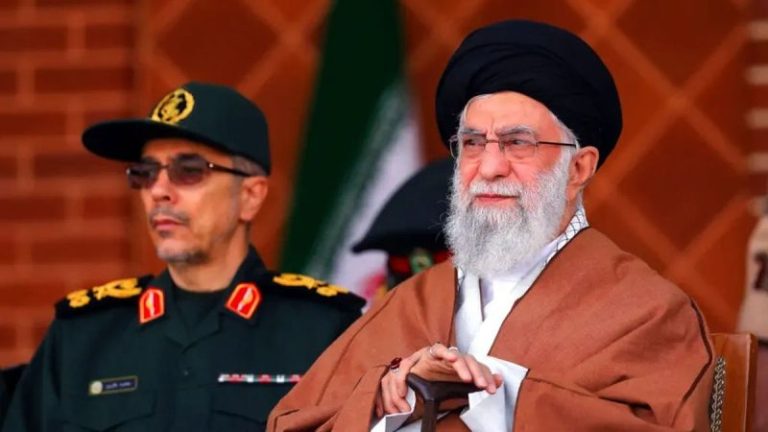
Chell’s warning comes as tensions spiraled following Saturday’s joint U.S.-Israel strikes on Iran targeting nuclear sites, missile facilities and leadership that killed Supreme Leader Ayatollah Ali Khamenei and several commanders.

The Iranian drones have proved deadly, having killed six U.S. service members in an attack on a tactical center in Kuwait earlier this week.

A CIA station in the U.S. Embassy in the Saudi capital of Riyadh was struck in an Iranian drone attack Tuesday, causing a limited fire but no reported injuries.

In Bahrain, drones reportedly identified as Iranian Shahed models smashed into the upper floors of the Era View Tower in Manama, about one mile from a U.S. Navy base.

An Iranian drone also struck a parking lot outside the U.S. Consulate in Dubai, while the United Arab Emirates said it intercepted Iranian missiles and drone attacks targeting the country.

‘Based on the engine sound, the apparent attack angle and the implied speed, to the best of my knowledge, this was a Shahed-class one-way attack drone,’ Chell said of the Dubai consulate attack video before suggesting the drone footage showed ‘a Shahed 191.’

Fars News Agency also released footage purporting to show scores of attack drones stockpiled in vast underground tunnels in Iran.

The video appeared to show rows of triangular-shaped drones on rocket launchers, missiles lined up, four to a launcher vehicle and walls adorned with Iranian flags and photographs of Khamenei. Outlets noted that the video’s timing and location remain unverified.

‘It is hard to confirm that Iran has the capability now to produce these drones in these volumes during wartime,’ Chell said of the stockpiling footage.

‘To the extent they were producing these in those numbers, a more-than-significant portion would have been for delivery to Russia — which does not seem impossible. That said, the drones in the underground propaganda video are Shahed 191 drones.’

A new report from the Carnegie Endowment for International Peace also underscored Chell’s comments on expense and range.

‘Right now, Iran is using a mixture of ballistic missiles and attack drones,’ said senior fellow Dara Massicot. ‘The methods are effective, but targeting drones in this way is resource-intensive and expensive, and it will drain certain types of interceptors quickly.’

‘Ground-based air defense interceptor missiles are not infinite, and the United States and its partners and allies have had stockpile challenges in this area for years,’ she added.

Another senior fellow, Steve Feldstein, added, ‘An important point is that the world is entering a new age of drone war as unmanned aircraft are proliferating on the battlefield in major conflicts and smaller ones.’

Related Article

Gulf states intercept hundreds of Iranian missiles and drones, issue joint condemnation with US
This post appeared first on FOX NEWS

President Donald Trump on Tuesday insisted Israel did not pressure him to conduct joint military strikes on Iran, claiming that he believed Iran’s Supreme Leader Ayatollah Ali Khamenei ‘was going to attack first.’

Days after the regime leaders were killed and war erupted in Iran, Trump addressed the decision to conduct a joint U.S.-Israel attack on the country, explaining he ‘might have forced Israel’s hand.’

‘I might have forced their hand,’ Trump said from the White House Oval Office on Tuesday. ‘You see, we were having negotiations with these lunatics, and it was my opinion that they were going to attack first. … If we didn’t do it, they were going to attack first. I felt strongly about that. … So, if anything, I might have forced Israel’s hand.’

Although sources previously told Fox News the timeline of the attack was moved up to seize an opportunity to strike regime leaders in downtown Tehran, Trump said both the U.S. and Israel were ready.

‘We’ve had a very, very powerful impact because virtually everything they have has been knocked out,’ the president said. ‘Now, their missile count is going way down. Amazingly, they’re hitting countries that were, let’s call them neutral … I think they were surprised. I was surprised, I think. Now those countries are all fighting against them and fighting strongly against them.’

Trump’s comments came after Democrats criticized his decision to launch strikes with Israel in Iran without congressional approval.

Administration officials said they provided congressional notification to the ‘Gang of Eight,’ a bipartisan group of top congressional intelligence leaders, ahead of the strikes, but Congress did not hold a vote to approve them.

The Trump administration has argued the U.S. was facing an ‘imminent threat,’ prompting military action.

Secretary of State Marco Rubio said the U.S. was not going to ‘sit there and absorb a blow’ from Iran, while War Secretary Pete Hegseth said the operation was not a ‘so-called regime change war’ or an open-ended conflict like that in Iraq.

Trump said he believes regardless of whether the U.S. took part in the strikes on Iran, Democrats would have been unhappy with his decision.

‘If I didn’t do this, guys like [Senate Minority Leader Chuck] Schumer who — losers, the Democrats [are] losers — … would say, ‘well, you should have done this.’ In other words, if I did it, it’s no good. If I didn’t do it, they would have said the opposite, ‘that you should have done this.’’

He added he has ‘never had more compliments’ on presidential action he has taken, noting ‘people felt that something had to be done.’

‘We [might] have a little high oil prices for a little while, but as soon as this ends, those prices are going to drop, I believe lower than even before,’ Trump said.

Fox News Digital’s Emma Colton contributed to this report.

Related Article

Trump slams Starmer as ‘not Winston Churchill’ for refusal to back Iran strikes
This post appeared first on FOX NEWS

Senior Iranian clerics would have been left ‘exposed’ after an Israeli airstrike hit a meeting place where they were supposed to be convening Tuesday — days after a strike leveled the Tehran compound of Supreme Leader Ayatollah Ali Khamenei, a defense analyst has claimed.

The clerics, members of the Assembly of Experts, had reportedly planned to meet at the location in Qom to deliberate succession plans for Khamenei, who was killed in the strikes, according to The Times of Israel.

‘This second strike would be another embarrassment to what has been left of the regime,’ Kobi Michael, a senior researcher at the Institute for National Security Studies and the Misgav Institute, told Fox News Digital.

‘It indicates intelligence dominance and superiority because any movement is detected, meaning they would feel exposed,’ Michael added.

‘As of now, the leadership would feel insecure and hunted, with all of their plans collapsing one after another.’

‘They would feel totally isolated and understand that the biggest risk might come from home — from a potential uprising next,’ he added.

Israel Defense Forces spokesman Brig. Gen. Effie Defrin confirmed that the Israeli Air Force struck the building where senior clerics had planned to assemble, The Times of Israel reported.

It remains unclear how many of the 88 members were present at the time of the strike, according to an Israeli defense source cited by the outlet. The second strike on Iran’s leadership comes amid a broader military campaign.

As previously reported by Fox News Digital, U.S. forces have struck more than 1,700 targets across Iran in the first 72 hours of Operation Epic Fury, according to a U.S. Central Command fact sheet.

The campaign is aimed at dismantling Iran’s security apparatus and neutralizing what officials describe as imminent threats.

According to U.S. Central Command, targets have included command-and-control centers, the Islamic Revolutionary Guard Corps Joint Headquarters, the IRGC Aerospace Forces headquarters, integrated air defense systems and ballistic missile sites.

‘We need strategic patience and determination, and in several weeks most of the job will be accomplished,’ Michael added. ‘Even if the regime does not collapse, Iran will not be like we used to know.

‘I assume that the U.S. and Israel will establish a very robust monitoring mechanism that will enable them to react whenever the regime tries to reconstitute its military capacities again.’

Related Article

Trump says Iran’s succession bench wiped out as Israeli strike hits leadership deliberations
This post appeared first on FOX NEWS

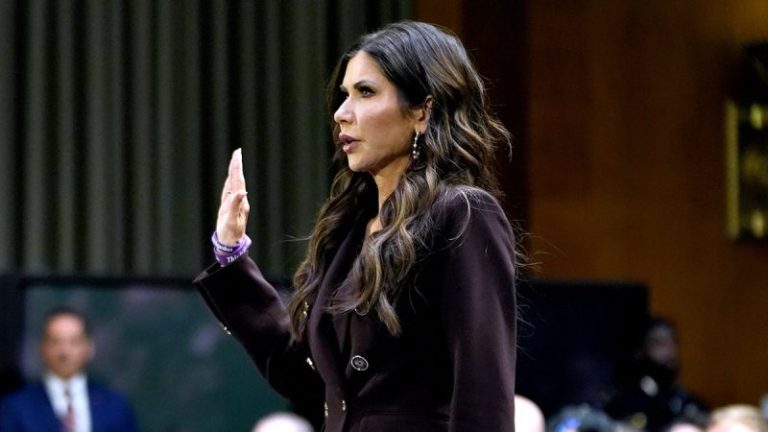
Homeland Security Secretary Kristi Noem heads into a second straight day of high-stakes Capitol Hill combat Wednesday, this time facing House Democrats eager to press her on ICE arrests, warrantless operations and the Trump administration’s mass deportation push — all as a partial shutdown clouds her agency.

After sparring with Senate Democrats over DACA arrests and Election Day enforcement, Noem now enters a House Judiciary hearing stacked with vocal critics, from Rep. Jamie Raskin, D-Md. to Rep. Jasmine Crockett, D-Texas., setting up another marathon session over immigration enforcement and executive power.

Noem caught heat from both sides during a Senate hearing Tuesday, when most Republicans praised her work correcting what they view as former President Joe Biden’s failed border policies. But Sen. Thom Tillis, R-N.C., and the entirety of the Democratic side of the dais emphatically confronted her during their questioning time.

In Wednesday’s hearing, Noem is expected to go up against House Judiciary Committee ranking member Raskin early, as the Maryland Democrat has previously pressed for more oversight of Noem and DHS, including rescission of policies allowing warrantless operations.

Rep. Pramila Jayapal, D-Wash., who is likely the committee’s top progressive, has previously called for stricter oversight of DHS and has criticized Noem’s management of ICE as it carries out immigration enforcement operations in cities including Minneapolis and New Orleans.

Rep. Mary Gay Scanlon, D-Pa., will also have a turn to question Noem. Her district in Delaware County was once a reliable Republican stronghold that elected a former Pennsylvania House speaker and leaned toward Trump in 2016. But it has since shifted and sided consistently with Democrats in recent elections.

Scanlon’s district has also featured numerous anti-ICE protests in visible areas such as the major intersection of Baltimore Pike and PA-320 last year, where throngs amassed to wave signs in the county’s commercial hub.

Rep. Jasmine Crockett, D-Texas, who is fighting a tough Senate primary Tuesday night, will question Noem near the end of Wednesday’s session.

Noem will also take questions from Rep. Henry ‘Hank’ Johnson, D-Ga., and Rep. Becca Balint, D-Vt., both of whom clashed with Attorney General Pam Bondi just days ago.

Rep. Eric Swalwell, D-Calif., and Rep. Jesus Garcia, D-Ill., have both been critical of ICE’s activities, as Garcia previously slammed Noem for her agency’s conduct during enforcement operations in his heavily Hispanic district in Chicago.

Noem is expected to have a less confrontational time answering questions from Chairman Jim Jordan, R-Ohio, and his caucus, which includes border-state Reps. Andy Biggs, R-Ariz., Kevin Kiley, Tom McClintock and Darrell Issa, R-Calif.

The wild card in committee hearings is typically Rep. Thomas Massie, R-Ky., who has been criticized by the ‘MAGA’ right for being insufficiently supportive of some of the administration’s policies.

Other members of note on the 44-member panel include Rep. Ben Cline, R-Va., Rep. Jeff Van Drew, R-N.J., Rep. Brandon Gill, R-Texas, Rep. Harriet Hageman, R-Wyo., Rep. Brad Knott, R-N.C., and Rep. Scott Fitzgerald, R-Wis.

On Tuesday, Noem clashed with ranking member Richard Durbin, D-Ill., over arrests of DACA recipients and questioned why Sens. Chris Coons, D-Del., and Alex Padilla, D-Calif., were concerned about ICE being dispatched near polling places on Election Day.

Noem appeared to ask both men whether their concern had anything to do with the idea of illegal immigrants voting in federal elections, which is illegal.

Related Article

Noem rips Dems for using families as ‘political weapons’ as DHS funding fight threatens life beyond ICE
This post appeared first on FOX NEWS

Proceeds to be used to Accelerate Procurement and Component Assembly for Demonstration Facility Deployment in Iceland

Syntholene Energy CORP. (TSXV: ESAF,OTC:SYNTF) (FSE: 3DD0) (OTCQB: SYNTF) (the ‘Company’ or ‘Syntholene’) is pleased to announce that it has closed its previously announced non-brokered private placement for aggregate gross proceeds of $3,750,000 (the ‘Financing’).

We are thrilled to have successfully closed this financing, which reflects strong investor confidence in Syntholene’s technology and vision,’ said Daniel Sutton, Chief Executive Officer. ‘These proceeds will accelerate the development of our demonstration facility in Iceland as we continue to advance our mission of delivering cost-competitive, carbon-neutral synthetic fuel.’

An aggregate of 8,333,333 units (each, a ‘Unit‘) were issued at a price of $0.45 per Unit pursuant to the Financing, with each Unit comprised of one common share of the Company (a ‘Common Share‘) and one non-transferable common share purchase warrant (a ‘Warrant‘). Each Warrant is exercisable into one additional Common Share at an exercise price of $0.63 for a period of two years from the date of issuance, subject to an acceleration provision whereby the Company may accelerate the expiry date of the Warrants if the daily trading price of the Common Shares equals or exceeds $0.90 on the TSX Venture Exchange for a period of ten consecutive trading days, in which case the Warrants will expire on the 30th day after the date on which notice is given by news release (the ‘Acceleration Provision‘).

Gross proceeds from the Financing are expected to be used toward the procurement and assembly of components for the Company’s planned demonstration facility in Iceland, and toward corporate marketing initiatives, investor relations and working capital.

In connection with the Financing, the Company entered into a fiscal advisory agreement dated February 11, 2026 with Canaccord Genuity Corp. ( ‘Canaccord‘), pursuant to which the Company and Canaccord agreed to extend the right of first refusal under the agency agreement between the Company, Canaccord and other agents dated September 18, 2025 to a period ending 18 months from closing of the Financing, and for the Company to pay certain fees to Canaccord in connection with the Financing. On closing of the Financing, Canaccord was paid a cash commission of $112,032, issued 248,960 non-transferable broker warrants, 111,111 corporate finance shares and 111,111 non-transferrable corporate finance warrants. Each broker warrant is exercisable into one Common Share at $0.45 per share for a period of two years from the date of issuance. Each corporate finance warrant is exercisable into one Common Share at $0.63 per share for a period of two years from the date of issuance, subject to the Acceleration Provision.

In addition, the Company entered into a finders’ fee agreement dated March 2, 2026 with Haywood Securities Inc. (‘Haywood‘), pursuant to which the Company agreed to pay certain fees to the Canaccord in connection with the Financing. On closing of the Financing, Haywood was paid a cash commission of $7,992 and issued 17,760 non-transferrable broker warrants. Each broker warrant is exercisable into one Common Share at $0.45 per share for a period of two years from the date of issuance.

All securities issued pursuant to the Financing are subject to a statutory hold period of four months and one day from the date of issuance, in accordance with applicable securities laws. The securities offered pursuant to the Financing have not been and will not be registered under the United States Securities Act of 1933, as amended, and may not be offered or sold in the United States absent registration or an applicable exemption from the registration requirements. This news release does not constitute an offer to sell or a solicitation of an offer to buy securities in any jurisdiction in which such offer, solicitation or sale would be unlawful.

The Financing constitutes a related party transaction within the meaning of Multilateral Instrument 61-101 – Protection of Minority Security Holders in Special Transactions (‘MI 61-101‘), as certain related parties of the Company participated in the Financing as follows: John Kutsch, director and officer acquired 1,455,556 Units for $655,000, Grant Tanaka, Chief Financial Officer acquired 111,111 Units for $50,000, and Anna Pagliaro, director acquired 22,222 Units for $10,000. Pursuant to Sections 5.5(b) and 5.7(1)(a) of MI 61-101, the Financing is exempt from the requirement to obtain a formal valuation and minority shareholder approval in respect of this transaction as the Company is not listed on the specified markets set out in MI 61-101 and the fair market value of the consideration from the related parties participating in the Financing is not greater than 25% of the market capitalization of the Company. The aforementioned directors disclosed their interest in the Financing to the board of directors of the Company, and the disinterested members of the board approved the Financing and related party transactions under applicable corporate law. In connection with the Financing, each investor in the Financing entered into a standard form of subscription agreement with the Company containing customary terms for a private placement of the nature of the Financing. The Company did not file a material change report in respect of the Financing at least 21 days before the closing of the Financing, which the Company deems reasonable in the circumstances in order to complete the Financing in an expeditious manner.

Early Warning Disclosure – Acquisition by John Kutsch

John Kutsch, a director of the Company, acquired 1,455,556 Units pursuant to the Financing for aggregate consideration of $655,000 representing a price of $0.45 per Unit. Immediately prior to closing of the Financing, Mr. Kutsch beneficially owned, directly or indirectly, 15,583,467 Common Shares, 543,400 Options, 100,000 RSUs and 2,386,755 deferred consideration shares (‘DCSs‘), representing approximately 22.6% of the issued and outstanding Common Shares on a non-diluted basis and, assuming the settlement of all RSUs into Common Shares, exercise of all Options into Common Shares and issuance of all DCSs, approximately 25.86% of the issued and outstanding Common Shares on a partially diluted basis. Immediately following closing of the Financing, Mr. Kutsch beneficially owns, directly or indirectly, 17,039,023 Common Shares, 543,400 Options, 100,000 RSUs, 2,386,755 DCSs and 1,455,556 Warrants, representing approximately 21.96% of the issued and outstanding Common Shares on a non-diluted basis and, assuming the settlement of all RSUs into Common Shares, exercise of all Options and Warrants into Common Shares and issuance of all DCSs, approximately 26.23% of the issued and outstanding Common Shares on a partially diluted basis. The Common Shares held by Mr. Kutsch are held for investment purposes and were acquired for investment. Mr. Kutsch has a long-term view of the investment and may acquire additional securities of the Company either on the open market, through private acquisitions or as compensation or sell the securities on the open market or through private dispositions in the future depending on market conditions, general economic and industry conditions, the Company’s business and financial condition, reformulation of plans and/or other relevant factors. Certain securities held by Mr. Kutsch as subject to Tier 2 escrow in accordance with TSXV policies, as described in the Filing Statement dated November 30, 2025, a copy of which is filed on the Company’s profile on SEDAR+.

A copy of John Kutsch’s early warning report will be filed on the Company’s profile on SEDAR+ (www.sedarplus.ca) and may also be requested by mail at Syntholene Energy Corp. Suite 1723, 595 Burrard Street, Vancouver, BC V7X 1J1, Attention: Corporate Secretary or phone at 604-684-6730.

About Syntholene

Syntholene is actively commercializing its novel Hybrid Thermal Production System for low-cost clean fuel synthesis. The target output is ultrapure synthetic jet fuel, manufactured at 70% lower cost than the nearest competing technology today. The company’s mission is to deliver the world’s first truly high-performance, low-cost, and carbon-neutral synthetic fuel at an industrial scale, unlocking the potential to produce clean synthetic fuel at lower cost than fossil fuels, for the first time.

Syntholene’s power-to-liquid strategy harnesses thermal energy to power proprietary integrations of hydrogen production and fuel synthesis. Syntholene has secured 20MW of dedicated energy to support the Company’s upcoming demonstration facility and commercial scale-up.

Founded by experienced operators across advanced energy infrastructure, nuclear technology, low-emissions steel refining, process engineering, and capital markets, Syntholene aims to be the first team to deliver a scalable modular production platform for cost-competitive synthetic fuel, thus accelerating the commercialization of carbon-neutral eFuels across global markets.

For further information, please contact:
Dan Sutton, CEO
comms@syntholene.com
www.syntholene.com
+1 608-305-4835

Investor Relations
KIN Communications Inc.
604-684-6730
ESAF@kincommunications.com

Neither TSX Venture Exchange nor its Regulation Services Provider (as that term is defined in policies of the TSX Venture Exchange) accepts responsibility for the adequacy or accuracy of this release.

Forward-Looking Statements

This press release contains forward-looking statements within the meaning of applicable securities laws. The use of any of the words ‘expect’, ‘anticipate’, ‘aims’, ‘continue’, ‘estimate’, ‘objective’, ‘may’, ‘will’, ‘project’, ‘should’, ‘believe’, ‘plans’, ‘intends’ and similar expressions are intended to identify forward-looking information or statements. All statements, other than statements of historical fact, including but not limited to statements regarding the proposed use of proceeds of the Financing, development of the test facility, commercial scalability, technical and economic viability, anticipated geothermal power availability, anticipated benefit of eFuel, and future commercial opportunities, are forward-looking statements.

The forward-looking statements and information are based on certain key expectations and assumptions made by the Company, including without limitation the assumption that the Company will be able to execute its business plan, including that it will use the proceeds of the Financing, if any, as described herein, that the Company will be able to advance its planned test facility, that the eFuel will have its expected benefits, that there will be market adoption, and that the Company will be able to access financing as needed to fund its business plan. Although the Company believes that the expectations and assumptions on which such forward-looking statements and information are based are reasonable, undue reliance should not be placed on the forward-looking statements and information because the Company can give no assurance that they will prove to be correct. Since forward-looking statements and information address future events and conditions, by their very nature, they involve inherent risks and uncertainties.

Actual results could differ materially from those currently anticipated due to a number of factors and risks, including, without limitation, Syntholene’s ability to meet production targets, realize projected economic benefits, overcome technical challenges, secure financing, maintain regulatory compliance, manage geopolitical risks, and successfully negotiate definitive terms. Syntholene does not undertake any obligation to update or revise these forward-looking statements, except as required by applicable securities laws.

Readers are advised to exercise caution and not to place undue reliance on these forward-looking statements.

NOT FOR DISSEMINATION IN THE UNITED STATES OR THROUGH U.S. NEWSWIRE SERVICES

To view the source version of this press release, please visit https://www.newsfilecorp.com/release/286066


News Provided by TMX Newsfile via QuoteMedia

This post appeared first on investingnews.com

With technology, energy and society set to undergo massive transformations over the next few decades, the mining sector may never have been more important than it is today.

Globally, demand for consumer electronics such as mobile phones, air conditioners and refrigerators is on the rise. Additionally, the energy needs and technological advancement associated with artificial intelligence (AI) and data centers are driving even more demand from commercial sectors.

However, the mining industry has been known for its heavy environmental footprint and complex relationships with local communities. As much of the world pushes towards a greener future, mining companies are increasingly integrating environmental and social responsibility as they operate mines and projects around the world.

In the opening keynote speech at the 2026 Prospectors & Developers Association of Canada convention in Toronto, Vale (NYSE:VALE) CEO Gustavo Pimenta, who joined the company in 2021 following one of the worst mining accidents in Brazil’s history, spoke about these challenges and the importance of addressing them.

Electrification continues driving minerals demand

Since the start of the third millennium, there has been a broad societal shift.

Not only has the Earth’s population exploded from about 6 billion in 2001 to over 8 billion today, but the needs of both developing and developed nations are changing and growing.

Increasingly, the populations in many developing nations are urbanizing, driving demand for the materials necessary to build and modernize the infrastructure, including electricity grids, needed to adequately support them.

Likewise, western desires and demands are also changing. Consumers are driving a transition to low-carbon and sustainable industries, while also moving toward more service- and tech-reliant economies.

These shifts in both developed and developing economies have one thing in common: they are not possible without the mining sector. However, it’s struggling to match the pace of demand growth.

“We’ll have to increase the supply of minerals in general by effect of five to six times, vis-a-vis everything with mining to date,” Pimenta said. He pointed out that without mining, there is no AI and no energy transition.

“Electrification is a massive theme and trend, the electrification of everything, that is driving so much of the copper excitement lately,” he added. However, Pimenta said it isn’t just copper demand that is increasing — he pointed to rising demand for other metals such as nickel, iron and rare earths.

Although demand for these commodities has been high, it’s only recently that more consumers are becoming aware of the important role they play in how electricity is delivered or how mobile phones are made.

For Pimenta, this has led to a disconnect, with NVIDIA (NASDAQ:NVDA) and its US$4.3 trillion market cap exceeding the US$3.8 trillion captured by the top 300 mining companies.

However, he sees some balance returning.

“That is certainly something that is imbalanced, and we started to see a little bit of that rebalance today with money moving away from tech into real, important assets like the commodity assets,” he said.

Evolving economic and environmental strategies for mining

As awareness increases alongside demand, there has been a greater pressure on mining companies to move beyond their checkered pasts and to recognize their own role in creating a sustainable, responsible industry.

Pimenta emphasized this point.

“We can’t just stand and have a conversation where we are telling people, ‘I’m sorry that you have to buy from me.’ We have to go beyond that. We have to move from being essential to something else,” he said.

He noted that his company, Vale, isn’t just focused on its operations in Canada or Brazil; it has operations in 31 countries, and the scope of its responsibility is global.

Pimenta suggested that the future of mining will require a different way of operating, and that some of the needed changes are already being implemented today, citing the adoption of technology and greater automation.

In terms of how Vale is progressing this at its own operations, the company’s use of these technologies led to its Brucutu mine in Brazil being awarded the Shingo prize for operational excellence.

This marked the first time the prize has been awarded to an operation in Latin America.

“That classification shows that moving towards that future not only is the right thing because it’s safe, but also it’s more productive and more efficient. I think we have to make sure we continue to accelerate that,” Pimenta said.

Another area of focus for Pimenta is for Vale to develop what he sees as the workforce of the future.

“They have to be able to deal with AI and find ways to be more productive,” he said. “So there’s a new workforce needed that coexists with the senior, experienced workforce that is already in the companies.”

While automation addresses some core safety and business case aspects of mining’s future, Pimenta also focused on environmental concerns as a central concern. Using the example of Vale’s Carajás operation, he explained how mining companies can offer protection to the lands on which they operate.

The site covers about 800,000 hectares, but because of an agreement it made with the Brazilian government in the 1980s, the company uses only 2 percent of the total area for its mining operations, and preserves everything else.

“What has happened to that area? Everything outside the area we protect has been devastated. We protect with technology, guards, a partnership with the Brazilian Federal Police, and a lot of investment,” Pimenta said.

He acknowledged that mines will impact the environment, and it may seem counterintuitive that companies like Vale can be stewards of the land in ways that governments can’t.

However, Vale’s own past hasn’t been without incident. In 2019, a tailings dam collapsed at its Brumadinho operation, sending 13 million cubic meters of mud and mining waste downstream, killing 272 people.

For his part, Pimenta didn’t shy away from this, and said it forced the company to reassess its operations.

“Today 5 percent of our production is without dams, dry stack infiltration, and that’s the way we will continue to move. We are doing more use of circularity. It’s cheaper, less environmental impact,” he said, noting the use of reprocessing of mine waste to gather more resources.

Additionally, Vale has also been working to reduce its carbon footprint. Pimenta stated that the company had been looking at several ways to do this including using ethanol in its trucks at its Brazilian mines instead of diesel.

However, mines are only one part of the equation for decarbonization, as even more carbon dioxide is emitted during the production of steel.

“The steel industry is still very dependent on fossil fuel, coal, and that’s how most of the production is based. We are working on two main fronts. The first is green solutions, new products that will help our clients to decarbonize,” he said.

One of these solutions is a new iron ore briquette that Pimenta says uses a cold agglomeration process that can reduce the carbon footprint when used in a blast furnace.

The second front Vale is focused on is the development of mega hubs to produce steel in regions that have cheap access to lower-carbon fuels like hydrogen.

Supporting local communities is key

Beyond the economics and the environmental concerns with mining, Pimenta says that mining companies hold social commitments to the communities in which they operate.

“Back in 2021, when I joined the company, we announced a target to lift 500,000 people out of poverty,” he said.

This goal drew a lot of questions from Vale shareholders who asked how much it would cost, and if this meant putting people on payroll. Pimenta explained Vale co-developed a methodology to help them address the specific needs of different communities where they operate.

“Sometimes it’s education, sometimes it’s job opportunities, sometimes they just need to eat to have another day,” he explained. “Today we can measure, we know the social security number of each one of the 52,000 people that, from international standards measurement, have been lifted out of poverty.”

Operations should go beyond mining and making money; they should also contribute positively to the community. If they do so, Pimenta says there could be a shift in how mining companies are perceived. Rather than being pariahs, he hopes they can become welcomed for the value they bring to people.

The company also has the goal of increasing the percentage of women in its workforce. “Diversity is another element that, despite people not talking about it, is important. It was important before, and it continues to be important,” he said.

Investor takeaway

Pimenta addressed early in his keynote that demand for resources is there, but access requires money — it’s started to flow, but he suggested that changing perceptions and approaches within the mining industry is critical.

While there has been a push from some to move away from initiatives like ESG, or diversity, equity and inclusion, the reality is that they’ve permeated the mining industry for a long time now.

Throughout the presentation, Pimenta laid out how these goals have not only become foundational to the way Vale operates, but they can also provide long-term economic benefits to mining companies.

Initiatives, such as greater automation, have made Vale’s operations more efficient, driving cost-effectiveness, while dry tailings have enabled the reprocessing of mining waste and the maximization of output.

Social programs can drive community involvement and help make the operations more desirable to the communities where they operate. This alone has been a bottleneck in permitting in many jurisdictions; if communities welcome mines, it can reduce significant red tape.

Likewise, a diversified workforce can create more jobs in the community while opening the industry to people who haven’t been accepted in the past, helping address another industry challenge: finding new workers.

Securities Disclosure: I, Dean Belder, hold no direct investment interest in any company mentioned in this article.

This post appeared first on investingnews.com

CALGARY, AB / ACCESS Newswire / March 3, 2026 / Valeura Energy Inc. (TSX:VLE,OTC:VLERF)(OTCQX:VLERF) (‘Valeura’ or the ‘Company’) acknowledges that Thailand’s Ministry of Energy has, by way of a press release, requested that domestic oil producers cooperate in supporting national energy security in Thailand, in light of disruptions to the normal supply of oil from the Middle East region. This request includes postponing any planned downtime of oil production facilities and temporarily suspending crude oil exports.

Valeura is seeking further clarification from the Ministry of Energy to ensure compliance with the request and to continue supporting Thailand’s economy with domestically-produced energy. Valeura anticipates that this new government action will not interfere with the Company’s ongoing operations in Thailand, and production is continuing as usual and in accordance with Valeura’s high standards for health, safety, and environmental stewardship.

Thailand’s local network of crude oil purchasers constitutes a viable market for Valeura’s crude oil, and includes both refiners and blenders who have direct experience with the Company’s particular crude oil streams. Typically, approximately one third of Valeura’s oil is sold into the domestic Thai market, and from time to time, each of Valeura’s oil streams have been sold within the domestic market.

Thailand is a net importer of oil, with approximately 92% of its daily crude oil requirements coming from foreign sources, predominantly the Middle East region (2025 data, Energy Policy and Planning Office, Ministry of Energy). Thailand has issued similar requests in response to geopolitical developments in the past, to support national energy security by temporarily mandating that domestically-produced petroleum remains within Thailand. Valeura is well-versed in responding to such requests and intends to comply, to support Thailand’s energy needs.

For further information, please contact:

Valeura Energy Inc. (General Corporate Enquiries) +65 6373 6940
Sean Guest, President and CEO
Yacine Ben-Meriem, CFO
Contact@valeuraenergy.com

Valeura Energy Inc. (Investor and Media Enquiries) +1 403 975 6752 / +44 7392 940495
Robin James Martin, Vice President, Communications and Investor Relations
IR@valeuraenergy.com

Contact details for the Company’s advisors, covering research analysts and joint brokers, including Auctus Advisors LLP, Beacon Securities Limited, Canaccord Genuity Ltd (UK), Cormark Securities Inc., Research Capital Corporation, Roth Canada Inc., and Stifel Nicolaus Europe Limited, are listed on the Company’s website at www.valeuraenergy.com/investor-information/analysts/.

About the Company

Valeura Energy Inc. is a Canadian public company engaged in the exploration, development and production of petroleum and natural gas in Thailand and in Türkiye. The Company is pursuing a growth-oriented strategy and intends to re-invest into its producing asset portfolio and to deploy resources toward further organic and inorganic growth in Southeast Asia. Valeura aspires toward value accretive growth for stakeholders while adhering to high standards of environmental, social and governance responsibility.

Additional information relating to Valeura is also available on SEDAR+ at www.sedarplus.ca.

Advisory and Caution Regarding Forward-Looking Information

Certain information included in this news release constitutes forward-looking information under applicable securities legislation. Such forward-looking information is for the purpose of explaining management’s current expectations and plans relating to the future. Readers are cautioned that reliance on such information may not be appropriate for other purposes, such as making investment decisions. Forward-looking information typically contains statements with words such as ‘anticipate’, ‘believe’, ‘expect’, ‘plan’, ‘intend’, ‘estimate’, ‘propose’, ‘project’, ‘target’ or similar words suggesting future outcomes or statements regarding an outlook. Forward-looking information in this news release includes, but is not limited to, the Company’s belief that the new government action will not interfere with the Company’s ongoing operations in Thailand; and the Company’s intent to comply with the government’s request, subject to further clarification.

Forward-looking information is based on management’s current expectations and assumptions regarding, among other things: political stability of the areas in which the Company is operating; continued safety of operations and ability to proceed in a timely manner; continued operations of and approvals forthcoming from governments and regulators in a manner consistent with past conduct; future drilling activity on the required/expected timelines; the prospectivity of the Company’s lands; the continued favourable pricing and operating netbacks across its business; future production rates and associated operating netbacks and cash flow; decline rates; future sources of funding; future economic conditions; the impact of inflation of future costs; future currency exchange rates; interest rates; the ability to meet drilling deadlines and fulfil commitments under licences and leases; future commodity prices; the impact of the Russian invasion of Ukraine; royalty rates and taxes; future capital and other expenditures; the success obtained in drilling new wells and working over existing wellbores; the performance of wells and facilities; the availability of the required capital to funds its exploration, development and other operations, and the ability of the Company to meet its commitments and financial obligations; the ability of the Company to secure adequate processing, transportation, fractionation and storage capacity on acceptable terms; the capacity and reliability of facilities; the application of regulatory requirements respecting abandonment and reclamation; the recoverability of the Company’s reserves and contingent resources; future growth; the sufficiency of budgeted capital expenditures in carrying out planned activities; the impact of increasing competition; the ability to efficiently integrate assets and employees acquired through acquisitions; global energy policies going forward; future debt levels; and the Company’s continued ability to obtain and retain qualified staff and equipment in a timely and cost efficient manner. In addition, the Company’s work programmes and budgets are in part based upon expected agreement among joint venture partners and associated exploration, development and marketing plans and anticipated costs and sales prices, which are subject to change based on, among other things, the actual results of drilling and related activity, availability of drilling, offshore storage and offloading facilities and other specialised oilfield equipment and service providers, changes in partners’ plans and unexpected delays and changes in market conditions. Although the Company believes the expectations and assumptions reflected in such forward-looking information are reasonable, they may prove to be incorrect.

Forward-looking information involves significant known and unknown risks and uncertainties. Exploration, appraisal, and development of oil and natural gas reserves and resources are speculative activities and involve a degree of risk. A number of factors could cause actual results to differ materially from those anticipated by the Company including, but not limited to: the ability of management to execute its business plan or realise anticipated benefits from acquisitions; the risk of disruptions from public health emergencies and/or pandemics; competition for specialised equipment and human resources; the Company’s ability to manage growth; the Company’s ability to manage the costs related to inflation; disruption in supply chains; the risk of currency fluctuations; changes in interest rates, oil and gas prices and netbacks; potential changes in joint venture partner strategies and participation in work programmes; uncertainty regarding the contemplated timelines and costs for work programme execution; the risks of disruption to operations and access to worksites; potential changes in laws and regulations, the uncertainty regarding government and other approvals; counterparty risk; the risk that financing may not be available; risks associated with weather delays and natural disasters; and the risk associated with international activity. See the most recent annual information form and management’s discussion and analysis of the Company for a detailed discussion of the risk factors.

The forward-looking information contained in this new release is made as of the date hereof and the Company undertakes no obligation to update publicly or revise any forward-looking information, whether as a result of new information, future events or otherwise, unless required by applicable securities laws. The forward-looking information contained in this new release is expressly qualified by this cautionary statement.

This news release does not constitute an offer to sell or the solicitation of an offer to buy securities in any jurisdiction, including where such offer would be unlawful. This news release is not for distribution or release, directly or indirectly, in or into the United States, Ireland, the Republic of South Africa or Japan or any other jurisdiction in which its publication or distribution would be unlawful.

Neither the Toronto Stock Exchange nor its Regulation Services Provider (as that term is defined in the policies of the Toronto Stock Exchange) accepts responsibility for the adequacy or accuracy of this news release.

This information is provided by Reach, the non-regulatory press release distribution service of RNS, part of the London Stock Exchange. Terms and conditions relating to the use and distribution of this information may apply. For further information, please contact rns@lseg.com or visit www.rns.com.

SOURCE: Valeura Energy Inc.

View the original press release on ACCESS Newswire

News Provided by ACCESS Newswire via QuoteMedia

This post appeared first on investingnews.com

President Donald Trump on Monday sent an official notification to Congress about the U.S. strikes against Iran, in which he attempted to justify the military action in the now expanding conflict in the Middle East.

In a letter obtained by FOX News, Trump told Senate President Pro Tempore Chuck Grassley, R-Iowa, that ‘no U.S. ground forces were used in these strikes’ and that the mission ‘was planned and executed in a manner designed to minimize civilian casualties, deter future attacks, and neutralize Iran’s malign activities.’

This comes after joint U.S.-Israeli strikes against Iran on Saturday as part of Operation Epic Fury, triggering a response from Tehran and a wider conflict in the region. The strikes killed the Islamic Republic’s Supreme Leader Ali Khamenei and other military leaders.

Trump wrote that it is not yet possible to know the full scope of military operations against Iran and that U.S. forces are prepared to take potential further action.

‘Although the United States desires a quick and enduring peace, not possible at this time to know the full scope and duration of military operations that may be necessary,’ Trump wrote. ‘As such, United States forces remain postured to take further action, as necessary and appropriate, to address further threats and attacks upon the United States or its allies and partners, and ensure the Government of the Islamic Republic of Iran ceases being a threat to the United States, its allies, and the international community.’

‘I directed this military action consistent with my responsibility to protect Americans and United States interests both at home and abroad and in furtherance of United States national security and foreign policy interests,’ he added. ‘I acted pursuant to my constitutional authority as Commander in Chief and Chief Executive to conduct United States foreign relations.’

Trump said he was ‘providing this report as part of my efforts to keep the Congress fully informed, consistent with the War Powers Resolution,’ as some Republican and Democrat lawmakers attempt to restrain the president’s military action, which they affirm is unconstitutional without congressional approval.

The president also accused Iran of being among the largest state sponsors of terrorism in the world and purported that the ‘Iranian regime continues to seek the means to possess and employ nuclear weapons,’ even after the White House said in June that precision strikes at the time ‘obliterated’ Iran’s nuclear enrichment facilities.

‘As I previously communicated to the Congress, Iran remains one of the largest, if not the largest, state-sponsors of terrorism in the world,’ Trump said in the letter on Monday. ‘Despite the success of Operation MIDNIGHT HAMMER, the Iranian regime continues to seek the means to possess and employ nuclear weapons. Its array of ballistic, cruise, anti-ship, and other missiles pose a direct threat to and are attacking United States forces, commercial vessels, and civilians, as well as those of our allies and partners.’

‘Despite my Administration’s repeated efforts to achieve a diplomatic solution to Iran’s malign behavior, the threat to the United States and its allies and partners became untenable,’ he continued.

Fox News’ Tyler Olson contributed to this report.

Related Article

Trump admin warned lawmakers Israel was ‘determined to act with or without us’ before massive Iran strikes
This post appeared first on FOX NEWS

Iranian drone strikes forced Qatar to halt liquefied natural gas (LNG) production Monday, jolting global energy markets and raising fears about supply disruptions as Tehran increased its attacks on regional infrastructure.

QatarEnergy, the state-owned giant and one of the world’s largest LNG producers, suspended operations at two facilities after drones launched from Iran hit the sites, according to reports.

Qatar’s Ministry of Defense also said in a statement, that two drones hit facilities in the country, though no casualties were reported.

The attacks also targeted a water tank at a power plant in Mesaieed and a key energy installation in Ras Laffan.

Qatar’s Ras Laffan complex is the world’s largest LNG export facility, making it one of the most critical energy hubs in the world.

About 20% of global LNG trade transited the Strait of Hormuz in 2024, primarily from Qatar, according to the U.S. Energy Information Administration.

Markets reacted Monday with Europe’s benchmark natural gas futures surging by the largest margin since the 2022 energy crisis triggered by the Ukraine war, Bloomberg reported.

Bloomberg also reported Dutch TTF natural gas prices rose by 50% after news of the shutdown. Asian LNG prices also recorded gains as traders tried to assess the scale and length of the disruption.

‘The threat to security of supply is here and now,’ Simone Tagliapietra, an analyst at Bruegel, told Bloomberg. ‘The extent of it will depend on the duration of the shutdown, but we are now into a new scenario.’

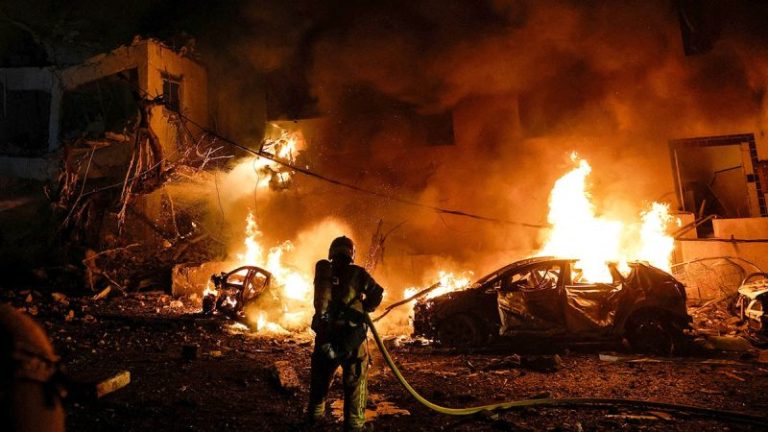
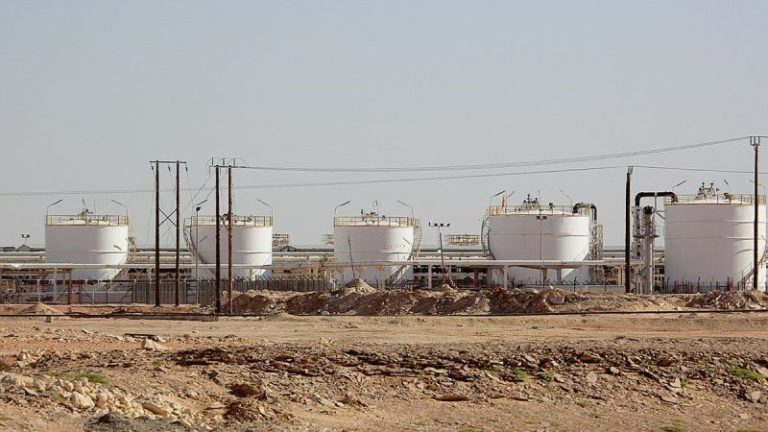
In Saudi Arabia, another drone attack caused a fire at the kingdom’s Ras Tanura oil refinery, forcing a partial shutdown there as well.

Saudi authorities have not reported casualties, but the attack heightened fears of broader instability in the Gulf’s energy corridor, according to reports.

Related Article

America strikes Iran again — has Washington planned for what comes next?
This post appeared first on FOX NEWS