Author

admin

Browsing

President Donald Trump’s second term has taken the world by storm in his first 100 days, leaving allies and adversaries scrambling to respond to new U.S. tariffs, stalled peace negotiations and hardball diplomacy from the White House.

On the campaign trail, he pledged to hit allies and foes alike with massive tariffs, end Russia’s war in Ukraine within 24-hours and threatened that ‘all hell’ would break out if all hostages were not freed from the clutches of Hamas in Gaza by the time he entered the Oval Office.

While Trump has been able to make good on some of his promises, other ambitions remain unmet. Here’s what Trump has accomplished and what challenges remain:

Where Russia’s war in Ukraine stands

Trump last week conceded that his pledge to end the three-year-old war in Ukraine within 24 hours of taking office was ‘figurative,’ acknowledging it was never a realistic goal. The conflict has claimed a reported 1 million casualties.

‘I said that as an exaggeration,’ he told reporters. 

While Trump has faced criticism over his ability to bring Russian President Vladimir Putin to the negotiating table, his team — led by Special Envoy Steve Witkoff and Secretary of State Antony Rubio — has made some headway, securing a 30-day ceasefire protecting Ukraine’s energy infrastructure.

But Putin has so far refused to enter any other brokered agreements, despite Kyiv’s willingness to play ball even after the historic Oval Office blow-up between Trump and Ukrainian President Volodymyr Zelenskyy in February.

Though Trump appeared to hold a grudge against Zelenskyy after Ukraine rejected a proposed mineral deal — even blaming him in part for Russia’s illegal invasion — relations between the two leaders appeared to improve over the weekend. Trump also set a new ultimatum for Putin, issuing a deadline to reach a ceasefire deal.

‘Two weeks or less,’ Trump told reporters Sunday, though he later added a bit more time would be acceptable. ‘We’ll see what happens over the next few days. We’ll probably learn a lot.’

Trump said he was ‘surprised and disappointed’ after Putin last week levied a barrage of missiles at Ukraine’s capital city of Kyiv in a strike that killed 12 civilians and injured nearly 100 more.

‘I want him to stop shooting, sit down and sign a deal,’ Trump said in reference to Putin. ‘We have the confines of a deal, I believe, and I want him to sign it and be done with it and just go back to life.’

Trump has not said how or whether he will hold Putin accountable if he doesn’t agree to a ceasefire and the White House has not responded to Fox News Digital’s repeated questions regarding the issue.

Gaza ceasefire

Before entering office, Trump repeatedly threatened Hamas that ‘all hell’ would break out if they didn’t return all hostages by the time he arrived at the White House. 

But the Palestinian terror group has ignored his threats and rejected Trump’s February proposal to turn the Gaza Strip into the ‘Riviera of the Middle East,’ saying it would adhere to a ceasefire agreement brokered between the terrorist organization and Israel, mediated by the U.S., Qatar and Egypt. 

Trump has not hit Hamas, nor have his negotiations to release hostages looked all that different from his predecessor’s.  

The first phase of what was intended to be a three-phase ceasefire saw the return of 33 hostages taken by Hamas, the majority of whom were abducted in the Oct. 7, 2023 attack on Israel, as well as the release of 1,800 Palestinian prisoners held by Jerusalem. 

But 59 hostages remain in Gaza, including American-Israeli Edan Alexander, and hopes of a second phase collapsed after negotiations stalled on terms surrounding future hostage releases, and in March Israel reignited military operations in the Gaza Strip.

A Qatari official on Sunday said the main hiccup in securing a ceasefire following the latest round of talks last week is that Israel has not presented a clear solution to end the war in exchange for hostage releases, Reuters reported. 

Trump on Friday said he pushed Israeli Prime Minister Netanyahu to reopen aid corridors into Gaza, which have been blocked since March 2, in order to allow food and medicine to reach Palestinians, though humanitarian corridors have not yet been opened. 

Iran nuclear agreement

Trump on Sunday said he believes a deal to end Iran’s nuclear program can be achieved ‘without having to start dropping bombs all over the place.’

Details on nuclear negotiations between the U.S. and Iran in Oman on Saturday, in which the third round of talks were held, remain nil, though Iranian Foreign Minister Abbas Araghchi reportedly told Iranian state media they were ‘very serious and work-focused.’ 

Araghchi described the hours-long talks as having finally ‘entered into deeper and more detailed discussions,’ though no specifics of the negotiations have been released. 

It remains unclear if the Trump administration is pursuing a halt to Tehran’s nuclear advancement or a complete disarmament arrangement, which would see the destruction of Iran’s centrifuge facilities and its stockpiles of near-weapons-grade enriched uranium. 

It also remains unclear how much time the president will allow for the negotiations to carry on. 

Relations with China deteriorate

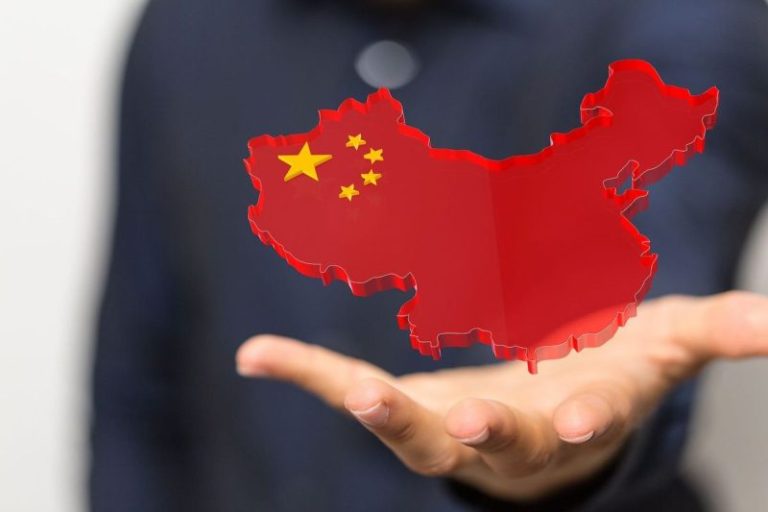
Relations between the U.S. and China have hit a level of animosity not seen between the two superpowers since Washington normalized ties with the Chinese Communist Party (CCP) in the 1970s. 

The initial U.S.-China trade war started during Trump’s first term, in which he hit China with 25% tariffs on $50 billion in Chinese goods in April 2018.

Beijing responded by slapping reciprocal tariffs on $50 billion worth of U.S. goods, mostly targeting U.S. agricultural products worth some $16.5 billion — a trade war that saw the loss of a quarter of a million U.S. jobs by January 2021, according to the U.S.-China Business Council (USCBC).

From the campaign trail, Trump threatened to hit China with 60% tariffs — which he nearly did in early April when he announced an additional 34% tariff on top of the existing taxes already in place. 

But what had already sent geopolitical shockwaves and sparked near-immediate market concerns was further escalated just over a week later when Trump ratcheted up tariffs on Beijing to 145%. 

China has responded by hitting Washington with its own 125% reciprocal tariffs on U.S. imports and, according to a Bloomberg report on Monday, cargo supply shipments have already dropped by 60%.

Americans are expected to begin feeling the pains of the trade war come mid-May.

Trump said last week he had reached some 200 trade deals with countries affected by his sweeping tariffs — measures that hit nearly every U.S. trading partner, including longtime allies. He paused the tariffs for 90 days earlier this month following intense backlash.

The status of trading relations with U.S. partners remains unclear, along with whether the administration will implement the blanket tariffs on those nations come July.

The 25% tariffs on steel, aluminum and imported vehicles remain in effect.

The White House did not directly respond to Fox News Digital’s questions regarding next steps Trump will takes when it comes to handling thus far unresolved conflict in Ukraine and the Gaza Strip.

A White House spokesman instead said, ‘President Trump inherited widespread foreign conflicts and a weak standing on the world stage from Joe Biden. Now, America is strong again, hostages are free from Gaza, Marc Fogel and Ksenia Karelina are home, hundreds of Houthi and other terrorists have been eliminated, and we are closer to peace than ever before. 

‘This President will never get the credit he deserves for his vast foreign policy accomplishments, but Americans know they are freer and safer under his leadership,’ the spokesman added.

This post appeared first on FOX NEWS

Rep. Marie Gluesenkamp Perez, D-Wash., described Rep. Nancy Pelosi, D-Calif., during her 2022 campaign as unrepresentative of American voters, but campaign finance reports revealed she collected at least $31,000 from the former House speaker and her political action committees during her three years in Congress. 

‘I want to make my position clear that I will not vote for Nancy Pelosi as Speaker of the House,’ Perez told The Columbian in 2022. ‘I look around, I look at my community, and I don’t see leadership in Congress looking like that.’

Despite the moderate Democrat rejecting Pelosi’s leadership on the campaign trail, campaign finance reports show that since she took office in 2022, Gluesenkamp Perez and her Super PAC, Marie Gluesenkamp Perez Campaign Defense Fund, have accepted at least $31,000 from Pelosi and her affiliated Super PACs, including PAC to the Future and Nancy Pelosi for Congress.

According to U.S. Census data, the $31,000 represents more than one third of the median household income for residents in Washington’s third congressional district, which includes Clark County and Vancouver, Washington, the district’s largest city.

‘We need more and more normal people to run for Congress. We need more people that work in the trades,’ Gluesenkamp Perez told Politico in 2023, as she described a Democratic Party out of touch with middle-class Americans. 

‘Just like her pal Nancy Pelosi, Marie Gluesenkamp Perez will say and do anything to get elected,’ Congressional Leadership Fund, the super PAC dedicated to maintaining the Republican majority in the U.S. House of Representatives, spokeswoman Torunn Sinclair, told Fox News Digital. 

‘That’s not a quality Washington State families want in their congresswoman.’

Gluesenkamp Perez was first elected to represent Washington in the U.S. House of Representatives in 2022 and won re-election in 2024, narrowly defeating her Republican challenger, Joe Kent, for the second time in two House cycles. 

The Washington congresswoman is considered one of the most vulnerable House Democrats in 2026, just as she was in 2024 after winning her 2022 race by less than two points. Republicans are likely to target her seat as an opportunity to widen their majority in the House. 

While Republicans slam Gluesenkamp Perez for flip-flopping on Pelosi, she is also facing the fury of her own party as hundreds of Democratic constituents protested at her town hall on Thursday. 

According to local reporting, including KGW News, protesters held up signs that read, ‘Shame on you,’ and chanted, ‘Vote her out,’ as Gluesenkamp Perez explained why she voted in support of the Safeguarding American Voter Eligibility (SAVE) Act. 

The SAVE Act, which passed in the House earlier this month, requires voters to obtain proof of citizenship in-person before they register for a federal election and will remove noncitizens from voter rolls. It has been widely rejected by Democrats since its conception, and 208 House Democrats voted against the bill. 

‘I do not support noncitizens voting in American elections – and that’s common sense to folks in Southwest Washington. Voting in our nation’s elections is a sacred right belonging only to American citizens, and my vote for the SAVE Act reflects that principle,’ Gluesenkamp Perez said after voting in support of the SAVE ACT, despite facing vocal opposition from constituents on Thursday for doing so. 

Gluesenkamp Perez also faced disapproval from Washington state Democrats for voting to censure Rep. Al Green, D-Texas, after he shouted and shook his cane during President Donald Trump’s joint address to Congress earlier this year.  

Gluesenkamp Perez’s campaign did not respond to Fox News Digital’s request for comment by deadline. 

This post appeared first on FOX NEWS

International Business Machines Corporation on Monday announced it will invest $150 billion in the U.S. over the next five years, including more than $30 billion to advance American manufacturing of its mainframe and quantum computers.

“We have been focused on American jobs and manufacturing since our founding 114 years ago, and with this investment and manufacturing commitment we are ensuring that IBM remains the epicenter of the world’s most advanced computing and AI capabilities,” IBM CEO Arvind Krishna said in a release.   

The company’s announcement comes weeks after President Donald Trump unveiled a far-reaching and aggressive “reciprocal” tariff policy to boost manufacturing in the U.S. As of late April, Trump has exempted chips, as well as smartphones, computers, and other tech devices and components, from the tariffs.

IBM said its investment will help accelerate America’s role as a global leader in computing and fuel the economy. The company said it operates the “world’s largest fleet of quantum computer systems,” and will continue to build and assemble them in the U.S., according to the release.

IBM competitor Nvidia, the chipmaker that has been the primary benefactor of the artificial intelligence boom, announced a similar push earlier this month to produce its NVIDIA AI supercomputers entirely in the U.S. 

Nvidia plans to produce up to $500 billion of AI infrastructure in the U.S. via its manufacturing partnerships over the next four years.

Last week, IBM reported better-than-expected first-quarter results. The company said it generated $14.54 billion in revenue for the period, above the $14.4 billion expected by analysts. IBM’s net income narrowed to $1.06 billion, or $1.12 per share, from $1.61 billion, or $1.72 per share, in the same quarter a year ago.

IBM’s infrastructure division, which includes mainframe computers, posted $2.89 billion in revenue for the quarter, beating expectations of $2.76 billion.

The company announced a new z17 AI mainframe earlier this month.

CNBC’s Jordan Novet contributed to this report.

This post appeared first on NBC NEWS

“60 Minutes” correspondent Scott Pelley paid tribute Sunday to Bill Owens, the show’s executive producer who resigned last week, saying on the air that “none of us is happy” about the extra supervision that corporate leaders are imposing.

Pelley made his comments at the end of the evening’s CBS News telecast, saying that in quitting, Owens proved he was the right person for the job.

“It was hard on him and it was hard on us,” Pelley said. “But he did it for us — and you.”

His on-air statement was an unusual peek behind the scenes at the sort of inner turmoil that viewers seldom get the opportunity to see.

Owens, only the third top executive in the 57-year history of television’s most influential newscast, resigned last week, saying he no longer felt he had the independence to run the program as he had in the past, and felt necessary.

CBS News’ parent company, Paramount Global, is in the midst of a merger with Skydance Media that needs the approval of the Trump administration. Trump has sued “60 Minutes” for $20 billion, saying it unfairly edited a Kamala Harris interview last fall to her advantage. Owens and others at “60 Minutes” believe they did nothing wrong and have opposed a settlement.

As a result, Pelley explained to viewers on Sunday, Paramount has begun to supervise “60 Minutes” stories in new ways. Former CBS News President Susan Zirinsky, a longtime news producer, has reportedly been asked to look at the show’s stories before they air.

“None of our stories has been blocked,” Pelley said. “But Bill felt he lost the independence that honest journalism requires. No one here is happy about it. But in resigning, Bill proved he was the right person to lead ‘60 Minutes’ all along.”

Despite this, “60 Minutes” has done tough stories about the Trump administration almost every week since the inauguration in January, many of them reported by Pelley. On Sunday, “60 Minutes” correspondent Sharyn Alfonsi had the latest, interviewing scientists about cutbacks at the National Institutes for Health.

Trump was particularly angered by the show’s telecast two weeks ago, saying on social media that CBS News should “pay a big price” for going after him.

This post appeared first on NBC NEWS

(TheNewswire)

Silver Crown Royalties Inc. ( Cboe: SCRI, OTCQX: SLCRF, BF: QS0 ) ( ‘Silver Crown’ ‘SCRi’ the ‘Corporation’ or the ‘Company’ ) is pleased to announce that the Company has successfully closed the third and final tranche (‘ Final Tranche ‘) of its non-brokered offering of units ( ‘Units’ ) that was previously announced on February 6, 2025 (the ‘Offering’ ) and issued 89,400 Units at a price of C$6.50 per Unit, for gross proceeds of approximately C$581,100

Each Unit consists of one common share ( ‘Common Share’ ) and one Common Share purchase warrant ( ‘Warrant’ ), with each Warrant exercisable to acquire one additional Common Share at an exercise price of C$13.00 for a period of three years from the closing date. A total of 232,248 Units were issued in accordance with the Offering for cumulative gross proceeds of C$1,509,615.

The proceeds from the Final Tranche will be used to partially fund the second tranche of the Company’s silver royalty acquisition on the Igor 4 project in Peru, as well as general and administrative expenses. All securities issued are subject to a statutory hold period of four months plus one day from the date of issuance, in accordance with applicable securities legislation. The closing was subject to customary conditions, including the approval of Cboe Canada Inc.

Regarding the receipt of payments from the Company’s producing royalties, Silver Crown expects to receive cash payments equivalent to approximately 6,703 ounces of silver in the first quarter of 2025. This is driven by the early payment of the PPX/Igor 4 royalty as well as payments under the Elk Gold Royalty.

ABOUT Silver Crown Royalties INC.

Founded by industry veterans, Silver Crown Royalties ( Cboe: SCRI | OTCQX: SLCRF | BF: QS0 ) is a publicly traded, silver royalty company. Silver Crown (SCRi) currently has four silver royalties of which three are revenue-generating. Its business model presents investors with precious metals exposure that allows for a natural hedge against currency devaluation while minimizing the negative impact of cost inflation associated with production. SCRi endeavors to minimize the economic impact on mining projects while maximizing returns for shareholders. For further information, please contact:

Silver Crown Royalties Inc.

Peter Bures, Chairman and CEO

Telephone: (416) 481-1744

Email: pbures@silvercrownroyalties.com

FORWARD-LOOKING STATEMENTS

This release contains certain ‘forward looking statements’ and certain ‘forward-looking information’ as defined under applicable Canadian and U.S. securities laws. Forward-looking statements and information can generally be identified by the use of forward-looking terminology such as ‘may’, ‘will’, ‘should’, ‘expect’, ‘intend’, ‘estimate’, ‘anticipate’, ‘believe’, ‘continue’, ‘plans’ or similar terminology. The forward-looking information contained herein is provided for the purpose of assisting readers in understanding management’s current expectations and plans relating to the future. Readers are cautioned that such information may not be appropriate for other purposes. Forward-looking statements and information include, but are not limited to, the proceeds from the Final Tranche will be used to partially fund the second tranche of the Company’s silver royalty acquisition on the Igor 4 project in Peru, as well as general and administrative expenses. Forward-looking statements and information are based on forecasts of future results, estimates of amounts not yet determinable and assumptions that, while believed by management to be reasonable, are inherently subject to significant business, economic and competitive uncertainties and contingencies. Forward-looking information is subject to known and unknown risks, uncertainties and other factors that may cause the actual actions, events or results to be materially different from those expressed or implied by such forward-looking information, including but not limited to: the impact of general business and economic conditions; the absence of control over mining operations from which SCRi will purchase gold and other metals or from which it will receive royalty payments and risks related to those mining operations, including risks related to international operations, government and environmental regulation, delays in mine construction and operations, actual results of mining and current exploration activities, conclusions of economic evaluations and changes in project parameters as plans continue to be refined; accidents, equipment breakdowns, title matters, labor disputes or other unanticipated difficulties or interruptions in operations; SCRi’s ability to enter into definitive agreements and close proposed royalty transactions; the inherent uncertainties related to the valuations ascribed by SCRi to its royalty interests; problems inherent to the marketability of gold and other metals; the inherent uncertainty of production and cost estimates and the potential for unexpected costs and expenses; industry conditions, including fluctuations in the price of the primary commodities mined at such operations, fluctuations in foreign exchange rates and fluctuations in interest rates; government entities interpreting existing tax legislation or enacting new tax legislation in a way which adversely affects SCRi; stock market volatility; regulatory restrictions; liability, competition, the potential impact of epidemics, pandemics or other public health crises on SCRi’s business, operations and financial condition, loss of key employees. SCRi has attempted to identify important factors that could cause actual results to differ materially from those contained in forward-looking statements, there may be other factors that cause results not to be as anticipated, estimated or intended. There can be no assurance that such statements will prove to be accurate, as actual results and future events could differ materially from those anticipated in such statements. Accordingly, readers are advised not to place undue reliance on forward-looking statements or information. SCRi undertakes no obligation to update forward-looking information except as required by applicable law. Such forward-looking information represents management’s best judgment based on information currently available.

This document does not constitute an offer to sell, or a solicitation of an offer to buy, securities of the Company in Canada, the United States or any other jurisdiction. Any such offer to sell or solicitation of an offer to buy the securities described herein will be made only pursuant to subscription documentation between the Company and prospective purchasers. Any such offering will be made in reliance upon exemptions from the prospectus and registration requirements under applicable securities laws, pursuant to a subscription agreement to be entered into by the Company and prospective investors. There can be no assurance that forward-looking statements will prove to be accurate, as actual results and future events could differ materially from those anticipated in such statements. Accordingly, the reader is cautioned not to place undue reliance on forward-looking statements.

CBOE CANADA DOES NOT ACCEPT RESPONSIBILITY FOR THE ADEQUACY OR ACCURACY OF THIS NEWS RELEASE.

Copyright (c) 2025 TheNewswire – All rights reserved.

News Provided by TheNewsWire via QuoteMedia

This post appeared first on investingnews.com

The American economy may be heading toward stagflation, an environment characterized by high inflation, slowing growth and rising unemployment, US Federal Reserve Chair Jerome Powell cautioned earlier this month.

‘Unemployment is likely to go up as the economy slows in all likelihood, and inflation is likely to go up as tariffs find their way and some part of those tariffs come to be paid by the public,’ Powell said during an April 15 appearance in Chicago.

While he was careful not to use the word ‘stagflation,’ experts have pointed out that the circumstances Powell outlined correspond with its definition, thrusting the term back into public discourse.

But what exactly is stagflation, and why is it such a concern for investors? Read on to find out.

What is stagflation?

Stagflation describes the economic scenario where inflation remains high even as economic growth slows and unemployment rises. Stagflation is a rare occurrence, and contradicts the foundational economic belief that inflation typically rises during economic booms and falls during recessions.

The term was coined by British politician Iain Macleod in 1965 and became infamous during the 1970s oil crisis, when a dramatic spike in oil prices triggered both rising costs and shrinking output across much of the global economy.

In simple terms, stagflation means you’re paying more for everything while earning less; at the same time, finding a new job, or even keeping your current one, becomes more difficult.

The misery index, created to measure such bleak periods, adds the unemployment rate to the inflation rate. During the worst of the 1970s, it exceeded 20. As of March 25, 2025, it stood at around 6.6, with inflation at 2.4 percent and unemployment at 4.2 percent. Many economists fear that number could rise quickly if current trends continue.

Why are experts sounding the alarm on stagflation?

A combination of geopolitical shocks, fragile supply chains and new economic policies — particularly a sweeping series of tariffs enacted by the Trump administration — has created a perfect storm, economists say.

The tariffs include a 10 percent universal tax on all imports, up to 25 percent duties on goods from Canada and Mexico and a staggering 245 percent tariff on imports from China. These are not minor adjustments — they are foundational changes to the pricing structure of the US consumer and business marketplace.

‘The level of the tariff increases announced so far is significantly larger than anticipated,’ Powell said in a written statement from his Chicago appearance that was published on April 16. ‘The same is likely to be true of the economic effects, which will include higher inflation and slower growth.’

In other words, the tariffs act as a supply shock: They make it more expensive to bring goods into the country, which businesses pass on to consumers through price hikes. At the same time, higher costs can lead companies to cut back on investment and hiring, slowing the economy and increasing job losses.

“The Trump White House tariff policy has certainly increased the risk of both higher inflation and lower growth,” Brett House, professor of professional practice in economics at Columbia Business School, told CNBC.

To better understand what’s at stake, economists are looking at the 1970s — a decade that was marked by an oil embargo, skyrocketing prices and stagnant economic activity.

In response, then-Fed Chair Paul Volcker aggressively hiked interest rates, with the federal funds rate peaking at nearly 21 percent in 1981. The move ultimately tamed inflation, but plunged the country into two recessions.

That painful cure became the playbook for handling runaway prices, with central banks committing to maintaining credibility and acting decisively, even at the cost of job losses.

“The Fed’s credibility in keeping inflation low and stable, won over decades, kept longer-term inflation expectations stable,” Fed Governor Adriana D. Kugler said in a recent statement.

Still, today’s economic landscape differs from the 1970s in critical ways. The US is no longer as dependent on foreign oil. And labor unions, once a powerful driver of wage spirals, now represent a smaller portion of the workforce.

However, these differences might not offer much protection. While oil prices are less of a concern today, tariff-induced uncertainty could have a similar chilling effect.

How does stagflation impact everyday life?

For most people, stagflation translates into economic whiplash.

Essentially, prices go up, wages don’t keep pace and job security becomes tenuous. According to Forbes, a rising misery index would create a whole new roster of challenges for the everyday person.

To illustrate, people will likely have to spend more to get the same quantity of food, clothes and gas. Employees’ chances of getting laid off or working fewer hours will increase. For recent college graduates, the job market could become especially brutal. For families, the cost of borrowing — whether to buy a home, finance a car or use a credit card — could rise steeply if the Fed chooses to raise interest rates to combat inflation.

Diane Swonk, chief economist at KPMG, described today’s environment as having a “whiff of stagflation,” where people feel less secure about their financial future, even if the economic statistics haven’t fully caught up to the sentiment.

Is stagflation a certainty?

Not all economists agree that stagflation is inevitable, or that it will reach the same severity as in the 1970s.

Still, concerns are growing. Michael Feroli, JPMorgan Chase & Co.’s (NYSE:JPM) chief US economist, issued a warning earlier this month, stating the bank now expects a recession in 2025.

He predicts unemployment will rise to 5.3 percent, while a core measure of inflation will reach 4.4 percent, which he described as a “stagflationary forecast.”

KPMG also projects a shallow recession, with inflation peaking at the end of the third quarter. But even a modest downturn could be painful for vulnerable workers and households already stretched thin by pandemic-era economic disruptions and the fading buffer of savings built up during that time.

What does stagflation mean for investors?

Stagflation presents a complex and often discouraging landscape for investors.

Unlike recessions, where bonds tend to do well as interest rates fall, stagflation often erodes the value of both stocks and bonds. In such periods, equities can suffer from declining corporate profits due to rising input costs, as well as weakening consumer demand, creating varied headwinds for the stock market.

At the same time, high inflation erodes the real value of future earnings, often leading to downward pressure on stock prices, particularly for growth-oriented companies whose valuations depend heavily on projected future cashflow.

Bonds, too, become vulnerable. Inflation eats into the fixed income stream provided by bonds, especially longer-term bonds. As inflation rises, the purchasing power of interest payments declines, and yields on newly issued bonds increase to compensate investors, driving down the market value of existing lower-yield bonds.

This was evident during the 1970s, the last prolonged period of US stagflation. At that time, both the S&P 500 (INDEXSP:.INX) and US treasuries experienced prolonged periods of underperformance in real terms.

Gold, on the other hand, surged in value as investors sought assets that could maintain their purchasing power amid inflation and economic uncertainty. The price of gold increased more than 1,000 percent from 1971 to 1980, reflecting its appeal as a hedge during economic stress. Commodities more broadly — such as oil, agricultural products and industrial metals — have historically performed better in stagflationary conditions.

Since commodities prices are a direct input into inflation measures, they tend to rise during inflationary periods, particularly when inflation is driven by supply shocks. For instance, in the 1970s, oil prices quadrupled following the OPEC embargo, delivering significant gains for energy producers and commodity-focused investors.

Still, it’s worth noting that no single asset or strategy is immune to the pressures of stagflation. While diversification, inflation hedging and a focus on quality assets are time-tested approaches, the unique combination of rising prices and faltering growth challenges even seasoned investors.

Investor takeaway

Stagflation is not just an economic term from the past — it may soon be a lived reality for millions and even billions.

With tariffs reshaping trade dynamics in real time, inflation hovering stubbornly above the Fed’s target and job growth showing signs of slowing, the conditions are set for a troubling period ahead.

Whether or not future policymaking can steer the economy away from this outcome remains to be seen. For now, consumers, businesses and investors alike would do well to prepare for the reality that stagflation brings — not just a historical anomaly, but a modern economic threat.

Securities Disclosure: I, Giann Liguid, hold no direct investment interest in any company mentioned in this article.

Keep reading…Show less
This post appeared first on investingnews.com

Nutritional Growth Solutions Limited (ASX:NGS) (‘NGS’ or ‘the Company’), is pleased to announce that it has received binding commitments for the issue of 1,000,000 convertible notes (Placement CNs), to be issued at $1.00 each (CN Placement).

HIGHLIGHTS

  • NGS has secured commitments of A$1.0 million under a placement of convertible notes.
  • Each investor who is issued with ordinary shares on conversion of the convertible notes will be issued with one option for each fully paid ordinary share that is issued on conversion of the convertible notes, with that issuance of options to take place on the same date as the ordinary share issuance date. This is expected to be within 10 business days of NGS shareholders approving that issuance of options including for the purposes of ASX Listing Rule 7.1. These options will be exercisable on a 1:1 basis into fully paid ordinary shares in NGS at an exercise price of $0.04 per option, and will expire 3 years following their issue date if they have not been exercised during that 3 year period.
  • The placement of convertible notes was supported by Australian sophisticated and professional investors.
  • Funds raised from the placement of convertible notes will be used to purchase inventory for retail expansion in CVS and Wakefern, as well as working capital and corporate expenses.

The offer of the Placement CNs was made to sophisticated and professional investors in Australia and successfully closed, achieving binding commitments of A$1.0 million.

Stephen Turner, NGS CEO and Managing Director, commented on the CN Placement:

“We are very pleased with the strong support shown by investors in this placement, which provides important growth capital to support our retail expansion into leading U.S. retailers, including CVS and Wakefern. We would like to thank our shareholders for their ongoing support as we execute our growth strategy and build on the momentum from our recent distribution achievements.”

The conversion of the convertible notes into fully paid ordinary shares in NGS will take place at a price of between A$0.03 and A$0.025 per ordinary share within 10 business days of NGS shareholders approving their conversion including for the purposes of ASX Listing Rule 7.1. NGS expects to convene a general meeting of its shareholders to consider whether to approve the conversion of the convertible notes into fully paid ordinary shares in NGS and whether to approve the issuance of options within the next few weeks.

Until the convertible notes are converted into ordinary shares or redeemed, they bear interest which is payable quarterly in arrear at either 10% per annum (if the holder of the convertible notes elects not to receive ordinary shares in NGS in lieu of cash interest), or 15% per annum (if the holder of the convertible notes elects to receive ordinary shares in NGS in lieu of cash interest). Issuance of ordinary shares in NGS in lieu of cash interest is subject to NGS being in compliance with the ASX Listing Rules. If the convertible notes have not been converted by the date that is 2 years after their issue date, they will be redeemed by NGS at their issue price.

Each investor who is issued with ordinary shares on conversion of the convertible notes will be issued with one option for each fully paid ordinary share that is issued on conversion of the convertible notes, with that issuance of options to take place on the same date as the ordinary share issuance date. This is expected to be within 10 business days of NGS shareholders approving that issuance of options including for the purposes of ASX Listing Rule 7.1. These options will be exercisable on a 1:1 basis into fully paid ordinary shares in NGS at an exercise price of $0.04 per option, and will expire 3 years following their issue date if they have not been exercised during that 3 year period (the CN Holder Options). Quotation of the CN Holder Options on the ASX will be sought.

USE OF PROCEEDS

The net proceeds from the issue of the convertible notes are planned to be used in the following areas:

LEAD MANAGER OPTIONS

The Company engaged GBA Capital Pty Ltd (AFSL 544680) to act as lead manager for the CN Placement (Lead Manager).

Under the terms of the mandate with the Lead Manager, the Lead Manager will be issued with 30% of the number of CN Holder Options (the Lead Manager Options). The Lead Manager Options will be exercisable on a 1:1 basis into fully paid ordinary shares in NGS at an exercise price of $0.04 per Lead Manager Option. The Lead Manager Options will expire 3 years following their issue date if they have not been exercised during that 3 year period.

The Lead Manager Options will be issued within 10 business days of NGS shareholders approving that issuance including for the purposes of ASX Listing Rule 7.1. NGS expects the Lead Manager Options to be issued at the same time as the issuance of the CN Holder Options. Quotation of the Lead Manager Options on the ASX will be sought.

Click here for the full ASX Release

This post appeared first on investingnews.com

A nonprofit patient’s rights advocacy group has placed a billboard in New York City’s Times Square praising President Donald Trump for ‘delivering’ on a major healthcare promise within his first 100 days in office. 

The billboard, placed by PatientsRightsAdvocate.org, (PRA) will run from April 28 to May 4 and touts Trump’s executive order signed in February directing the departments of the Treasury, Labor, and Health and Human Services to make healthcare prices transparent.

‘President Trump delivers healthcare price transparency,’ the billboard, along with a picture of Trump resembling Superman says. ‘First 100 Days!’

Trump’s order directed the departments to ‘rapidly implement and enforce’ the Trump healthcare price transparency regulations, which he claims were slowed by the Biden administration.

The departments will ensure hospitals and insurers disclose actual prices, not estimates, and take action to make prices comparable across hospitals and insurers, including prescription drug prices.

PRA says that more than 1 in 3 Americans postponed or avoided care due to ‘fear of unknown costs’ and that 100 million Americans are in medical debt, which represents the country’s largest cause of personal bankruptcy. 

 ‘The magnitude of President Trump’s delivering ‘radical’ price transparency in healthcare is historic,’ Cynthia Fisher, founder and chairman of PatientRightsAdvocate.org, said in a statement. 

‘Patients soon will have access to actual prices, not estimates, before they receive care. Prices create a functional market where the consumer benefits from competition and choice to lower costs,’ Fisher continued. ‘Soon, patients will be able to shop for the best quality of care at the best price. Prices protect patients with remedy and recourse from overcharges, errors, and fraud. We are closer than ever to shifting the power to the consumer to live healthier and longer lives at a far lower cost.’  

Andrew Bremberg, former assistant to President Donald Trump and director of the Domestic Policy Council at the first Trump White House, also touted Trump’s executive order, saying that the president ‘built on his first term healthcare legacy and signed an even stronger price transparency executive order. 

‘His efforts to deliver real prices, not estimates, underscore his unwavering commitment to the American people. President Trump has a bold vision to transform the American healthcare system with price transparency as the catalyst.’ 

The executive order notes a number of concerns with current healthcare pricing, including that prices vary between hospitals in the same region.

‘One patient in Wisconsin saved $1,095 by shopping for two tests between two hospitals located within 30 minutes of one another,’ according to the statement.

The White House claims one economic analysis found Trump’s original price transparency rules, if fully implemented, could deliver savings of $80 billion for consumers, employers and insurers by 2025.

‘The hospital wanted me to pay $3,700 up front for a simple fibroid removal surgery,’ Arizona patient Theresa Schmotzer said in a statement at the time of the billboard’s placement. ‘Because that seemed high, I went looking for what it should cost. I found the actual price online and saw that my share was only $700 not $3,700. Because I had access to real prices, not estimates, I saved $3,000. President Trump’s executive order on healthcare price transparency will allow more people to find real prices and save.’  

States across the country have been pushing similar measures in the form of legislation to ensure that patients are given more transparency about the healthcare costs they are assuming, including in Ohio, where legislation was recently signed into law requiring hospitals to post exact prices in dollars and cents for all available services. 

‘They’ll be able to check them, compare them, go to different locations, so they can shop for the highest-quality care at the lowest cost,’ Trump wrote in a statement when he signed the executive order. ‘And this is about high-quality care. You’re also looking at that. You’re looking at comparisons between talents, which is very important. And, then, you’re also looking at cost. And, in some cases, you get the best doctor for the lowest cost. That’s a good thing.’

Fox News Digital’s Alexandra Koch contributed to this report.

This post appeared first on FOX NEWS