Altech Batteries (ATC:AU) has announced Altech – CERENERGY Battery 46.7M Euro German Grant Approval
Download the PDF here.
This post appeared first on investingnews.com

Altech Batteries (ATC:AU) has announced Altech – CERENERGY Battery 46.7M Euro German Grant Approval
Download the PDF here.
Highlights
– Altech Batteries GmbH’s CERENERGY(R) battery project has been approved by Germany’s Ministry of Economic Affairs and Energy as eligible for Grant receipt under the ‘STARK'(1) economic development program
– Altech Batteries GmbH’s CERENERGY(R) battery project passed the second stage of Government approval for a 30% CAPEX grant in the amount of 46.7 million Euro
– The grant approval is not yet final and conditional and subject to overall financial close and the availability of funds to be approved by the German parliament as part of the 2026 Government Budget
(1) STARK – Starkung der Transformationsdynamik und Aufbruch in den Revieren und an den Kohlekraftwerkstandorten
The STARK program supports projects that support the transformation process towards an ecologically, economically, and socially sustainable economic structure in the coal regions and is initiated by the German Federal Government and supported by the EU
Altech has been actively applying for various grants offered by the State of Saxony, Federal Government of Germany, and the European Union. The State of Saxony and Brandenburg, along with the European Union, offer substantial support for renewable energy projects, including grants under the STARK program aimed at converting lignite coal to renewable energy sources. These grants are part of broader efforts to transition regions dependent on fossil fuels toward sustainable energy solutions. Altech’s site, located in these areas, stands to benefit from various funding programs designed to support clean energy projects, including EU grants for energy transformation and innovation.
Having now received written confirmation of the STARK program for the CERENERGY(R) project, it is a great sign of support and a recognition of this innovative battery technology jointly undertaken by Altech and the Fraunhofer Gesellschaft.
About Altech Batteries Ltd:
Altech Batteries Limited (ASX:ATC,OTC:ALTHF) (FRA:A3Y) is a specialty battery technology company that has a joint venture agreement with world leading German battery institute Fraunhofer IKTS (‘Fraunhofer’) to commercialise the revolutionary CERENERGY(R) Sodium Alumina Solid State (SAS) Battery. CERENERGY(R) batteries are the game-changing alternative to lithium-ion batteries. CERENERGY(R) batteries are fire and explosion-proof; have a life span of more than 15 years and operate in extreme cold and desert climates. The battery technology uses table salt and is lithium-free; cobalt-free; graphite-free; and copper-free, eliminating exposure to critical metal price rises and supply chain concerns.
The joint venture is commercialising its CERENERGY(R) battery, with plans to construct a 100MWh production facility on Altech’s land in Saxony, Germany. The facility intends to produce CERENERGY(R) battery modules to provide grid storage solutions to the market.
Source:
Altech Batteries Ltd
Contact:
Corporate
Iggy Tan
Managing Director
Altech Batteries Limited
Tel: +61-8-6168-1555
Email: info@altechgroup.com
Martin Stein
Chief Financial Officer
Altech Batteries Limited
Tel: +61-8-6168-1555
Email: info@altechgroup.com
News Provided by ABN Newswire via QuoteMedia
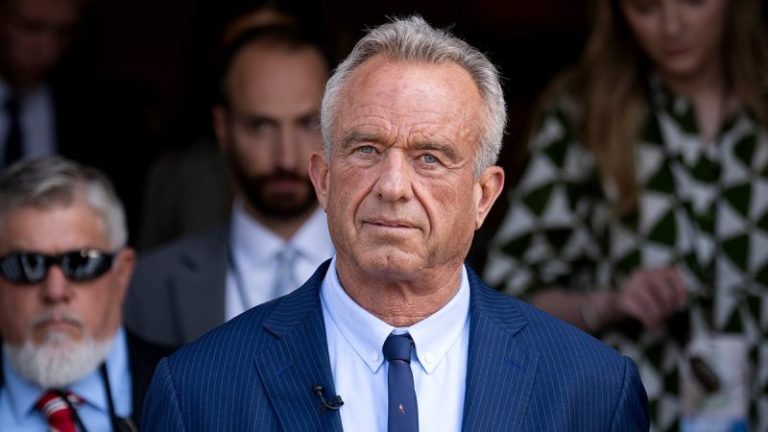
. – Sen. Bernie Sanders of Vermont says if Robert F. Kennedy Jr. doesn’t step down as Health and Human Services secretary in President Donald Trump’s administration, Americans will need to speak out.
‘We’ve got to rally the American people. This is a huge issue,’ Sanders told Fox News Digital on Monday.
Sanders, the ranking member of the Senate’s Health, Education, Labor and Pensions Committee, said ‘I’m not a scientist, I’m not a doctor, but I do talk to scientists, and I do talk to doctors, and the evidence is overwhelming. It’s not contestable. Vaccines work. They save millions and millions of lives.’
And the progressive champion and 2016 and 2020 Democratic presidential nomination runner-up warned that ‘if Kennedy and his friends are able to make people think that vaccines are not safe, it will be a real public health crisis for America.’
Sanders is among a growing list of politicians and officials who warn that Kennedy, the longtime environmental activist and vaccine skeptic who Trump picked late last year as his health secretary in his second administration, is jeopardizing the health of Americans with his controversial moves.
‘Mr Kennedy and the rest of the Trump administration tell us, over and over, that they want to Make America Healthy Again. That’s a great slogan. I agree with it. The problem is that since coming into office, President Trump and Mr Kennedy have done exactly the opposite,’ Sanders wrote this past weekend in an opinion piece in the New York Times.
And Sanders said that ‘despite the overwhelming opposition of the medical community, Secretary Kennedy has continued his longstanding crusade against vaccines and his advocacy of conspiracy theories that have been rejected repeatedly by scientific experts.’
Sanders’ call for Kennedy to resign came after last week’s firing of Centers for Disease Control (CDC) Director Susan Monarez, less than a month after she was confirmed. The firing of Monarez came after she refused Kennedy’s directives to adopt new limitations on the availability of some vaccines, including approvals for COVID-19 vaccines.
Four other top CDC officials resigned in protest hours later, accusing the Trump administration and Kennedy of weaponizing public health.
Sanders, who was interviewed Monday after headlining the New Hampshire AFL-CIO’s annual Labor Day breakfast, charged in his statement over the weekend that Kennedy ‘has absurdly claimed that ‘there’s no vaccine that is safe and effective’.’
‘Who supports Secretary Kennedy’s views?’ Sanders asked. ‘Not credible scientists and doctors. One of his leading ‘experts’ that he cites to back up his bogus claims on autism and vaccines had his medical license revoked and his study retracted from the medical journal that published it.’
The incident received rare bipartisan pushback by some members of Congress.
But the White House defended the firing of Monarez, with White House Press Secretary Karoline Leavitt telling reporters on Thursday that the president has the ‘authority to fire those who are not aligned with his mission.’
‘The president and Secretary Kennedy are committed to restoring trust and transparency and credibility to the CDC by ensuring their leadership and their decisions are more public-facing, more accountable, strengthening our public health system and restoring it to its core mission of protecting Americans from communicable diseases, investing in innovation to prevent, detect and respond to future threats,’ Leavitt argued.
Fox News Bonny Chu and Landon Mion contributed to this story

A new push by states to tax the real estate of the wealthy has sparked a backlash among brokers and potential buyers, who say the taxes punish the most important local spenders.
From tax hikes on pricey second homes in Rhode Island and Montana to Cape Cod’s proposed transfer tax on homes over $2 million and the L.A. mansion tax, state and local governments see a revenue gold mine in the pricey properties of the wealthy.
“It’s a smack in the face to people who just spend money here,” said Donna Krueger-Simmons, sales agent with Mott & Chace Sotheby’s International in Watch Hill, Rhode Island.
The tax hikes are being driven by tighter state budgets and populist anger over housing costs. States are looking to offset budget cuts expected from the new tax and spending bill in Washington. At the same time, the housing market has become a tale of two buyers, with the middle class and younger families struggling to afford homes while the luxury housing market thrives from wealthy all-cash buyers.
The solution for many states: tax the homes of the rich.
Rhode Island’s new levy, nicknamed “The Taylor Swift Tax,” is among the most extreme. The popstar bought a beach house in the state’s elite Watch Hill community in 2013.
The measure imposes a new surcharge on second homes valued at more than $1 million. For non-primary residences, or those not occupied for more than 182 days a year, the state will charge $2.50 for every $500 in assessed value above the first $1 million. That charge is on top of existing property taxes and will add up to big increases for luxury homes in Newport, Watch Hill and other well-heeled, summer communities in the state.
A version of this article appeared in CNBC’s Inside Wealth newsletter with Robert Frank, a weekly guide to the high-net-worth investor and consumer. Sign up to receive future editions, straight to your inbox.
Swift’s house, for instance, is assessed at around $28 million, according to local real estate records. Her current property taxes are estimated at around $201,000 a year. The new charges will add another $136,442 to her annual taxes, bringing her yearly total to $337,442 — even though locals say she rarely visits.
Real estate brokers say the increase targets the very taxpayers who already contribute the most. Wealthy second-homeowners pay hefty property taxes but don’t use many local services, since their primary residences are in New York; Boston; Palm Beach, Florida; or other locales. Their kids typically don’t attend the local schools, and they’re infrequent users of the police, fire, water and other municipal services since most stay for only 10 to 12 weeks out of the year.
“These are people who just come here for the summer, spend their money and pay their fair share of taxes,” said Krueger-Simmons. “They’re getting penalized just because they also live somewhere else.”
Brokers and longtime residents say the summer residents of Newport, Watch Hill and other seasonal beach towns are the economic engines for local businesses, restaurants and hotels.
“You’re just hurting the people who support small business,” said Lori Joyal, of the Lila Delman Compass office in Watch Hill. “You’re chasing away the people who spend most of the money in these towns.”
Rhode Island is also hiking its conveyance tax on luxury real estate starting in October. The tax on real estate sales will be an additional $3.75 for each $500 paid above $800,000 for a real estate purchase. At the same time, the state’s steep estate tax deters many of the ultra-wealthy from living there full-time.
Brokers say some second-home owners are considering selling and many would-be buyers are pausing their purchases. While the tax hike alone isn’t expected to lead to any significant wealth flight, Joyal said potential buyers in Rhode Island are already looking at coastal towns in Connecticut as alternatives.
“It’s always about choices,” she said. “At the end of the day it’s about how they can choose to spend their discretionary dollars. Connecticut has some beautiful coastal towns without some of these other high taxes.”
Montana has passed a similar tax. The influx of Californians and other affluent newcomers who poured into the state during Covid has led to soaring home prices and growing resentment over gentrification. Meanwhile, the state’s low income tax rate and lack of a sales tax has left it little room for revenue increases to handle the necessary increase in services.
In May, the state passed a two-tier property tax plan, lowering rates for full-time residents and raising taxes on second homes and short-term rentals. For primary residences and long-term rentals valued at or below the state’s median home price, the tax rate will be 0.76%. Homes worth more than that will face a tiered-rate system of up to 1.9% on any value over four times the median price.
The Montana Department of Revenue expects the changes, which will start next year, will hike second-home taxes by an average of 68%. Brokers say some buyers are waiting to see the tax bills next year before making any decisions about whether to buy or sell.
“I’ve heard about some buyers who have put on the brakes to wait for the dust to settle and see what happens,” said Valerie Johnson, with PureWest Christie’s International Real Estate in Bozeman, Montana.
Johnson said that while the tax was touted by legislators as hitting wealthy second-home owners, it will also hit longtime locals who own investment homes and rent them out for income.
“These are small businesses for many people,” she said.
Manish Bhatt, a senior policy analyst at the Tax Foundation, said tax hikes aimed at wealthy second-home owners may be popular politically, but they rarely make for successful or efficient tax policy. Real property tax reform should be broad based, rather than focused on taxpayers who are singled out just because they don’t live in a community full-time, he said.
“There is a grab to find revenue right now,” he said. “But taxing second-home owners could have the opposite impact — dissuading people from owning a second home or continue to own in those communities.”
While the new taxes alone might not drive out the wealthy, “we do know that taxes are important to businesses and individuals and could cause people to make a decision to buy in another nearby state,” Bhatt said.
The projected revenue from the new taxes may also disappoint. When Los Angeles passed its so-called “mansion tax” in 2022, proponents touted revenue projections of between $600 million to $1.1 billion a year. The tax, imposed on real estate sales over $5 million, has only raised $785 million after more than two years, according to the Los Angeles Housing Department.
Higher interest rates that hurt the housing market have played a role, experts say. Yet Michael Manville, professor of urban planning at the UCLA Luskin School of Public Affairs, said wealthy buyers and sellers also reduced transactions in response to the tax.
“The lower revenue is a reason to be concerned because it suggests that the tax might actually be reducing transactions, which in turn can reduce housing production and property tax revenue,” he said.
Basin Energy offers uranium and rare earth exposure through high conviction exploration projects within tier-1 jurisdictions.
The group’s primary focus is the testing of district scale uranium and rare earth potential at the Sybella Barkly project, located directly west of the prolific mining town of Mount Isa, in northwest Queensland. These projects are deemed prospective for roll-front uranium, shear hosted hard rock uranium, sediment/ionic clay hosted rare earth elements and for hard rock rare earths. Evidence in support of this comes from the direct proximity and geological analogies to both ASX Paladin Energy’s Valhalla uranium deposit and its uranium source, the Sybella Batholith and for rare earth potential adjacent to ASX Red Metal’s Sybella Discovery.
The company also provides strategic exposure to three projects in Canada’s Athabasca Basin, the heartland of uranium exploration, where it is partnered with TSXV CanAlaska uranium and has a strategic early mover position in the emerging energy metals districts of Sweden and Finland ranked 6 and 1, respectively on the Fraser index in 2024.
With a technically driven exploration focus for uranium and rare earth minerals within tier-one jurisdictions, Basin Energy is well-positioned to capitalize on the global push for clean energy.
Basin holds 5,958 sq km of exploration tenure in the Mount Isa district of northwest Queensland. The projects provide compelling walk-up drill targets that can be rapidly and cost-effectively tested using air core and reverse circulation (RC) drilling.
The drill-ready, district scale opportunity includes:
In addition to these three district-scale targets, the project area contains multiple shear-hosted Valhalla-style uranium targets defined for immediate assessment.
Project location map
The primary model is based on mineralisation sourced from the various granites of the Sybella Batholith, a large north-south trending igneous body containing zones enriched in rare earth elements. This includes the Red Metal (ASX:RDM) giant Sybella Discovery. Several granites from the Sybella are also uranium rich, potentially being the source of Paladin Energy’s (ASX:PDN) Valhalla deposits.
The projects cover an extensive portion of the Sybella Batholith, deemed prospective for granite-hosted REEs, as well as a significant landholding west of the Sybella, known as the Barkly Tablelands. The Barkly Tablelands are regarded as prospective for sediment-hosted mineralisation and was surveyed with airborne electromagnetics (AEM) by Summit Resources in February 2007, prior to its acquisition by Paladin Energy. Whilst numerous targets were identified, no drilling was completed at the time. Importantly, past exploration focused mainly on base metals, phosphate and water bores, meaning the uranium and rare earth potential remains virtually untouched.
Prospective target concepts
The Summit Resources AEM survey identified an extensive network of paleochannels within the Barkly Tablelands, fed from the uranium-rich Sybella Batholith. This network trends south beyond the limits of existing survey data, suggesting even further potential remains to be identified.
Historical drilling in the area noted geological features typically associated with uranium deposits, such as redox fronts, sandstone channels and impermeable cap rocks. However, no uranium assays were conducted at the time.
Given the Sybella granites are considered the potential source of Paladin’s nearby Valhalla uranium deposits, Basin believes significant uranium will have also been transported into these paleochannels through erosion and chemical leaching processes. Previous work by Summit Resources and Furgo has already prioritised several high-potential targets. Basin plans to complete a first pass aircore drilling program to delineate this potential in Q4 2025.
Ternary radiometrics and AEM conductivity depth slice (paleochannels are projected to surface)
Surface and auger geochemistry sampling across the Barkly Tablelands has confirmed significant REE enrichment, with multiple results exceeding 600 ppm TREO. The sediments are directly sourced from the Sybella Batholith with the highest of these values located directly down drainage catchments linked to Red Metals Sybella Discovery.
Sediment-hosted REEs and target zones
Previous AEM surveys also revealed a broad conductive layer within the Barkly Tablelands sediments, approximately 12 metres thick at shallow depths between 20-32 metres, and covering a footprint of over 1,000 sq km. This layer is interpreted to represent a clay-rich unit capable of hosting ionic clay REE deposits.
AEM outlining laterally extensive conductive sediment target
The various granites that make up the Sybella contain zones of enriched REEs, including the Red Metal (ASX:RDM) owned Sybella Discovery.
Basin’s ground includes several prospects (Newsmans Bore, Eight Mile and Threeways) where a shallow proof of concept auger drilling program returned highly encouraging results in 2023.
The most encouraging results from the auger drilling at Newmans Bore reported at over 0.5 m at >1000 ppm TREO, including:
These results are very significant, as mineralisation continued to the end of hole and closely mirrors the geochemical patterns seen by Red Metal prior to their Sybella discovery.
Auger drilling completed by NeoDys, with highlights from Newmans Bore
Red Metals Discovery REE anomaly
Red Metal utilised RC drilling beneath this anomaly and identified broad zones of rare earth anomalism, which led to the Sybella discovery. NeoDys’ auger drilling across Basin’s project has outlined similar levels and scale of rare earth anomalism, demonstrating strong potential for comparable discoveries. See figure below.
Stylised section of NeoDys Newmans Bore auger drilling
The next phase for Basin will be to conduct deeper RC drilling to test potential continuity of these anomalies. Drilling is proposed for Q4 2025.
In addition to the three district scale targets, Basin also sees strong potential for Valhalla-style shear zone uranium mineralisation within the North section of the license. Airborne radiometric data highlights several anomalies crossing both the Sybella granite and the Cromwell metabasalt, features consistent with the alternation patterns seen at other uranium deposits in the region. The scale and geological setting of these radiometric anomalies draws comparison to Paladin Energy’s Mount Isa (Valhalla) project, which contains 148.4 Mlbs of U3O8 at 728 ppm, and a combined 116 Mlbs within the Valhalla, Odin and Skal resources located just 7 km east of Basin’s license
Filtered airborne radiometric data (isolating high-U, low-K rocks) highlighting several potential Valhalla-style shear zone targets in the Cromwell Metabasalt and the adjacent Sybella Batholith
Strategic Global Uranium Exposure
Basin holds interests in three projects, in partnership with TSX-V CanAlaska within the heartland of the world class Athabasca Basin uranium district. The company’s primary focus here is on the Geikie project where early drilling has identified a significant alteration system with analogies to major basement hosted uranium deposits of the district such as Nexgen energy’s prolific Arrow discovery. The company is actively seeking partnerships for the Marshall and North Millennium projects, which are prospective for unconformity style mineralisation with walk up drill ready targets.
The Geikie Project spans 351 sq km on the eastern margin of the Athabasca Basin and benefits from excellent access, with Highway 905 just 10 km to the east.
This underexplored region is considered highly prospective for shallow, basement-hosted uranium mineralisation. Historically overlooked in past exploration campaigns, the area has seen renewed interest following recent basement-style uranium discoveries elsewhere in the district.
In 2025, Basin Energy addedtwo new claims to the Geikie uranium project, consisting of 22.3 sq km, bringing the total project area to 373.1 sq km. Mineral claims MC00022218 and MC00022219 are contiguous to the Preston Creek prospect, where 2024 drilling outlined a large-scale hydrothermal system within a complex structural corridor with uranium anomalism.
Basin has secured 100 percent ownership of multiple reservations and licences across Sweden and Finland, prospective for uranium and critical green energy metals. This portfolio targets shear-hosted and intrusive-related mineralisation and consists of five exploration licenses within Sweden and five reservations in Finland. In 2025, Basin Energy announced theapproval for the Trollberget project application located in Northern Sweden, between the Björkberget and Rävaberget projects within the Arvidsjaur-Arjeplog uranium district. The project added 116 sq km of exploration land, increasing Basin Energy’s total holding to 219 sq km within this highly prospective uranium and green energy metals district.
These results reinforce the high-grade uranium potential of Basin’s Scandinavian portfolio and will directly guide the next phase of drill targeting.
Blake Steele is an experienced metals and mining industry executive and director with extensive knowledge across public companies and capital markets. He was formerly president and chief executive officer of Azarga Uranium (Azarga), a US-focused integrated uranium exploration and development company. He led Azarga into an advanced stage multi- asset business, which was ultimately acquired by enCore Energy (TSXV:EU) for C$200 million in February 2022.
Pete Moorhouse has 18 years of mining and exploration geology experience with extensive experience in the junior uranium sector, having spent over 10 years with ASX-listed uranium explorer and developer Alligator Energy (ASX:AGE). He holds significant competencies in evaluating, exploring, resource drilling and feasibility studies across many global uranium and resource projects.
Cory Belyk holds 30 years’ experience in exploration and mining operations, project evaluation, business development and extensive global uranium experience most recently employed by Cameco in the Athabasca Basin. He was a member of the exploration management team that discovered Fox Lake & West McArthur uranium deposits. Currently CEO/VP of Canadian Athabasca uranium explorer and project generator, CanAlaska (TSXV:CVV).
Matgthew O’Kane is an experienced executive and company director with over 25 years’ experience in the mining and mineral exploration, commodities, and automotive sectors. He has held senior leadership roles in Australia, Asia and North America, in both developed and emerging markets, from start-up companies through to multinational corporations. He has served on the Board of mining and mineral exploration companies in Canada, Hong Kong and Australia. He was a member of the Board of Azarga Uranium from 2013 until its sale to Encore Energy in February of 2022. He is currently a director of two ASX listed exploration and development companies.
Ben Donovan has over 22 years of experience in the provision of corporate advisory and company secretary services. He holds extensive experience in ASX listing rules compliance and corporate governance and has served as a Senior Adviser to the ASX for nearly 3 years Currently CoSec to several ASX listed resource companies including M3 Mining (ASX:M3M), Magnetic Resources (ASX:MAU) and Legacy Iron Ore (ASX:LCY).
Odile Maufrais is an exploration geologist with over 14 years of experience and has an extensive understanding of the uranium exploration and mining industry, having worked at ORANO, one of the largest global uranium producers, for 12 years on various assignments in Canada, Niger, and France. Maufrais has significant Athabasca Basin-specific experience, being involved in over 15 greenfield and brownfield uranium exploration projects located throughout the Basin. Her most recent roles for ORANO comprised leading various uranium exploration campaigns and being an active member of the ORANO research and development team, which involved working on trialing and implementing cost-effective and streamlined drilling techniques within the Athabasca Basin. She also played a key role in the update of the National Instrument 43-101 compliant mineral resource estimate for the Midwest Main and Midwest A deposits. Maufrais holds a Master of Science from Montpellier II University, France.

Rapid Critical Metals (RLL:AU) has announced RCM to Acquire Webbs Consol Silver Project from Lode Res.
Download the PDF here.

Greenvale Energy (GRV:AU) has announced Commencement of Henbury Field Program
Download the PDF here.

Former FBI Director Robert Mueller was diagnosed with Parkinson’s disease, his family revealed to the New York Times.
Mueller is the former special counsel who led the Russia investigation into President Donald Trump’s 2016 campaign.
Mueller, 81, was diagnosed in 2021 and retired from public life the following year after briefly teaching law, according to a family statement provided to The Times.
‘Bob was diagnosed with Parkinson’s disease in the summer of 2021. He retired from the practice of law at the end of that year. He taught at his law school alma mater during the fall of both 2021 and 2022, and he retired at the end of 2022,’ the statement said.

President Donald Trump says he plans to sign an executive order aimed at requiring voter ID in elections across the country.
Trump made the statement on social media late Saturday night, saying he is also seeking other reforms to how U.S. elections take place.
‘Voter I.D. Must Be Part of Every Single Vote. NO EXCEPTIONS! I Will Be Doing An Executive Order To That End!!! Also, No Mail-In Voting, Except For Those That Are Very Ill, And The Far Away Military. USE PAPER BALLOTS ONLY!’ Trump wrote on Truth Social.
Trump previously attempted to impose voter ID via an executive order earlier this year in a wider election integrity action.
In April, Judge Colleen Kollar-Kotelly of the U.S. District Court for the District of Columbia struck down the portions of that order that related to voter identification requirements.
Kollar-Kotelly maintained that Trump did not have the authority to issue such an order, as the Constitution delegates control of election regulations to Congress and states.
‘Consistent with that allocation of power, Congress is currently debating legislation that would affect many of the changes the President purports to order,’ Kollar-Kotelly, a Clinton appointee, wrote in her order. ‘No statutory delegation of authority to the Executive Branch permits the President to short-circuit Congress’s deliberative process by executive order.’
Nevertheless, requiring voters to provide proof of citizenship remains widely popular among Americans, according to a poll from Gallup taken just before the 2024 elections.
The poll found that 84% of U.S. adults were in favor of requiring voters to show identification and 83% supported requiring proof of citizenship when registering for the first time.
When broken down by party, 67% of Democrats, 84% of Independents and 98% of Republicans were in favor of mandating voter ID. The party breakdown over proof of citizenship was similar, with 66% of Democrats, 84% of Independents and 96% of Republicans supporting the idea.
Fox News’ Rachel Wolf contributed to this report

Artificial intelligence (AI) stocks saw continued pressure this week as concerns about overvaluation weighed on the sector ahead of NVIDIA’s (NASDAQ:NVDA) results release for its second fiscal quarter.
The company beat Wall Street projections on revenue, earnings and profits, but shares still fell in extended trading on Tuesday (August 26) after it reported no H20 sales to China, where competition from domestic firms is heating up.
John Murillo, chief business officer at B2BROKER, suggested the pullback could present a short-term buying opportunity for high-quality names with strong fundamentals, but cautioned that it could be the start of a broader correction.
Reports that DeepSeek will train its newest AI models on Huawei chips and Cambricon Technologies’ (SHA:688256) 4,300 percent revenue surge underscore the shifting AI landscape. Still, optimism wasn’t absent: NVIDIA CEO Jensen Huang pointed to accelerating global demand and unveiled a US$60 billion buyback program to reassure investors.
“All in all, the sector’s long-term trajectory remains bullish, with AI adoption accelerating across industries,” said Murillo.
Nasdaq Composite, NVIDIA and Dell Technologies performance, August 26 to 29, 2025.
Chart via Google Finance.
However, it wasn’t enough to reassure the public, and NVIDIA’s share price fell over 4 percent between Wednesday (August 27) and Friday (August 29). As investors analyzed new inflation data that indicates tariffs are impacting prices, other AI-related stocks saw losses too, pulling the S&P 500 (INDEXSP:.INX) from its recent record highs.
With that, here’s a look at some of the other drivers that shaped the tech sector this week.
In a US Securities and Exchange Commission Form 8-K filing dated August 22, Intel (NASDAQ:INTC) warns that the federal government’s 10 percent stake in its business could cause “adverse reactions,” including litigation from investors, employees, customers, suppliers, partners and foreign governments.
The company also discloses a clause in the agreement that would raise the government’s stake to 15 percent if the company fails to meet set manufacturing thresholds.
Moreover, the filing states that, if this agreement prompts other government bodies to seek similar stakes, the varied agendas could diminish the voting power of other shareholders.
The comments come after the White House announced last week that it would take a 10 percent stake in the company in a deal worth around US$8.9 billion. On Monday, (August 25), President Donald Trump suggested he might pursue similar agreements with other American companies, posting on Truth Social:
“I will also help those companies that make such lucrative deals with the United States. I love seeing their stock price go up, making the USA RICHER, AND RICHER.”
Meanwhile, White House economic advisor Kevin Hassett told CNBC that the deal is part of a broader strategy to create a sovereign wealth fund that may include additional companies.
Later, during an interview on CNBC’s Squawk Box on Tuesday, Secretary of Commerce Howard Lutnick said Pentagon officials are considering acquiring equity stakes in leading defense contractors such as Lockheed Martin (NYSE:LMT).
On Tuesday, Apple (NASDAQ:AAPL) invited media members and analysts to its next launch event, which is scheduled for September 9 at 10:00 a.m. PST.
The event, which will be live streamed from the iPhone maker’s campus, is expected to be the venue for the introduction of the new iPhone 17 lineup and updated Apple Watch models.
The new iPhone series is rumored to include four models:
The new iPhones are also expected to feature a new ‘Liquid Glass’-based interface as part of iOS 26.
According to Bloomberg journalist Mark Gurman, who has a reputation for being one of the most accurate and prolific sources of leaks about Apple’s future products, the company is planning three years of major iPhone redesigns, starting with the September release. Apple’s first foldable iPhone, code-named V68, is slated to arrive in 2026, according to Gurman. Apple’s 2027 ‘iPhone 20’ will feature curved glass edges to complement the upcoming Liquid Glass-based interface for iOS and other operating systems.
IBM (NYSE:IBM) and Advanced Micro Devices (AMD) (NASDAQ:AMD) said on Tuesday that they plan to collaborate to develop quantum-centric supercomputing.
The two companies, which have each fundamentally advanced the frontiers of quantum hardware and software, AI accelerators, CPUs and GPUs, said they will work together to “develop scalable, open-source platforms that could redefine the future of computing” by combining their strengths in quantum and high-performance computing.
“Quantum computing will simulate the natural world and represent information in an entirely new way,” said Arvind Krishna, chairman and CEO of IBM, adding that the firms’ collaborative efforts will “build a powerful hybrid model that pushes past the limits of traditional computing.”
“We see tremendous opportunities to accelerate discovery and innovation,” said Dr. Lisa Su, chair and CEO of AMD.
In an interview with Axios, Jay Gambetta, IBM’s quantum vice president, said he aims to get fault-tolerant quantum computers, a set of techniques and architectural designs that ensure a computation can proceed accurately even in the presence of errors, “by the end of this decade.”
During a cabinet meeting on Tuesday, Trump told reporters that Meta Platforms’ (NASDAQ:META) Louisiana data center will cost the company around US$50 billion to build.
That’s over 70 percent of the company’s projected CAPEX spending in its latest quarterly report.
“When they said US$50 billion for a plant, I said, ‘What the hell kind of plant is that?’” said Trump, revealing a photo of the proposed data center, Hyperion, superimposed over the island of Manhattan.
“When you look at this, you understand why it’s US$50 billion,” he added.
When the data center was announced, officials in Louisiana estimated the project would cost around US$10 billion. Meta has not confirmed this new estimate and declined to comment on Trump’s remarks.
On Thursday (August 28), Commonwealth Fusion Systems, a leading nuclear fusion developer in the US, announced it has secured US$863 million in an oversubscribed Series B2 funding round.
Investors including Morgan Stanley (NYSE:MS) and NVIDIA contributed to this capital raise, which will facilitate the completion of Commonwealth’s Spac fusion demonstration machine, as well as the commencement of construction on a new ARC power plant in Virginia.
“Investors recognize that CFS is making fusion power a reality. They see that we are executing and delivering on our objectives,” said the company’s CEO and co-founder, Bob Mumgaard. “This funding recognizes CFS’ leadership role in developing a new technology that promises to be a reliable source of clean, almost limitless energy — and will enable investors to have the opportunity to capitalize on the birth of a new global industry.”
Securities Disclosure: I, Meagen Seatter, hold no direct investment interest in any company mentioned in this article.