Atlantic Lithium (A11:AU) has announced Corporate Funding Update
Download the PDF here.
This post appeared first on investingnews.com

Atlantic Lithium (A11:AU) has announced Corporate Funding Update
Download the PDF here.

During 2025, silver has continued to build on gains made in the previous year, soaring above US$40 per ounce in early September.
The gains have been driven by several factors, most notably the tightening of supply and demand fundamentals, resulting from higher demand from industrial sectors and its use in photovoltaics.
Additionally, prices have found tailwinds from safe-haven investors who find silver’s lower entry price compared to gold appealing. The moves have been fueled by uncertainty in the global financial markets as the United States implements its new trade and tariff policies. Investors have also been unsettled by an escalating tension in the Middle East and the unresolved conflict between Russia and Ukraine.
Below is an overview of the five largest silver-mining stocks by market cap as of August 25, 2025, as per data gathered using TradingView’s stock screener. Read on to learn more about the activities and operations of these large-cap silver stocks.
Market cap: C$16.35 billion
Share price: C$45.06
Pan American Silver is among the world’s largest primary silver producers, with silver assets located throughout the Americas and operations in Peru, Mexico, Bolivia, Argentina and Chile.
According to its Q2 report, released on August 6, overall, the company produced 5.1 million ounces of silver during the period. Its largest silver-producing asset is the La Colorada mine in Mexico, which produced 1.51 million ounces of silver during the quarter.
Other significant contributors to its silver production were its El Peñon gold-silver mine in Chile at 968,000 ounces of silver, Huaron in Peru at 844,000 ounces, San Vicente in Bolivia at 755,000 ounces, Cerro Moro in Argentina at 488,000 ounces and Dolores in Mexico at 291,000 ounces.
The company also reaffirmed its 2025 operating outlook and expects full year silver production in the 20 million to 21 million ounce range, with all in sustaining costs in the US$16.25 to US$18.25 per ounce range.
Additionally, the company announced on May 11 that it had entered into a definitive agreement to acquire all of the issued and outstanding shares of MAG Silver (TSX:MAG,OTC Pink:FNLPF). Under the terms of the US$2.1 billion deal, MAG shareholders will be paid out a mix of cash totaling US$500 million and 0.755 shares in Pan American per MAG share.
Once complete, Pan American will control 44 percent of the Juanicipio mine in Central Mexico. The mine is operated by Fresnillo (LSE:FRES), which holds the remaining 56 percent.
Pan American announced on August 25 that the Mexican Federal Economic Competition Commission approved the deal and expects the acquisition to be completed on approximately September 4.
Market cap: C$6.03 billion
Share price: C$12.36
First Majestic has three wholly owned silver-producing mines in Mexico: San Dimas in Durango, Santa Elena in Sonora and La Encantada in Coahuila. The first two also produce gold.
The company holds a 70 percent stake in the Los Gatos silver mine in Chihuahua as well. First Majestic acquired the property in January 2025 through a merger with Gatos Silver. Japan’s Dowa Holdings (TSE:5714) holds the remaining 30 percent interest.
In addition to its producing assets, First Majestic commenced bullion sales from its own minting facility in Nevada, US, named First Mint, in March 2024.
According to its Q2 2025 report, the company produced 3.7 million ounces of silver during the quarter, a 76 percent increase year-over-year, and set a record quarterly revenue of US$264.2 million.
Its recently acquired Los Gatos was its largest producer, delivering more than 1.52 million ounces of attributable silver. San Dimas took second place at 1.24 million ounces, while La Encantada and Santa Elena produced 628,105 ounces and 306,224 ounces respectively.
Market cap: C$3.39 billion
Share price: C$32.71
MAG Silver is a silver production company that has a 44 percent stake in the Juanicipio mine in Zacatecas, Mexico. Fresnillo owns the remaining 56 percent of the operation.
In addition to Juanicipio, the company also has two exploration projects, Deer Trail and Larder. Deer Trail is a silver, gold, lead, zinc and copper property in Utah, US, that hosts a historic mine, and Larder is a gold project located in Ontario, Canada.
In the company’s Q2 2025 financial results on May 8, MAG Silver reported mining operations at Juanicipio had produced 4.3 million ounces of silver during the second quarter of the year. Additionally, ongoing optimizations at the site’s processing plant boosted silver recovery to 94.6 percent in Q2, up from 92.4 percent during the same period last year.
On May 11, MAG announced that it had entered into a definitive agreement to be acquired by Pan American Silver in a US$2.1 billion deal. According to an announcement from Pan American, it is expected to close in September 2025.
Market cap: C$2.3 billion
Share price: C$7.99
Endeavour Silver is a silver company with two operating silver-gold mines in Mexico — Guanaceví and Bolañitos — plus the commissioning-stage Terronera project and several exploration properties.
On May 1, the company announced that it had completed the acquisition of Compañia Minera Kolpa and the Huachocolpa Uno mine in Peru. The terms of the deal will see Endeavour pay total considerations of US$145 million in a combination of cash and Endeavour shares to Kopla shareholders.
Endeavour has also agreed to pay an additional US$10 million in cash in contingent payments if certain events are met, and will add US$20 million in net debt, which will remain outstanding and repayable by Minera Kolpa.
In the company’s
Q2 earnings report, Endeavour reported silver production of 1.48 million ounces, 13 percent higher than during the second quarter of 2024. The company attributed the increased production to the acquisition of Kolpa.
The company also provided an update on development at Terronera, which is nearing commercial production. As of the end of July, milling rates had increased to 1,900 and 2,000 metric tons per day, with average silver recoveries of 71 percent.
Market cap: C$1.66 billion
Share price: C$4.83
Vizsla Silver is advancing its Panuco silver-gold project in Sinaloa, Mexico, toward production with the development of the Copala test mine.
Viszla released an updated preliminary economic assessment for the Panuco project on February 20, suggesting a post tax net present value of US$1.14 billion with an internal rate of return of 85.7 percent and a pay back period of less than 1 year.
Measured and indicated silver resources at the site totaled 127.82 million ounces of contained silver from 12.96 million metric tons of ore with an average grade of 307 grams per metric ton (g/t) silver. Its inferred resource totals 73.62 million ounces of silver from 10.47 million metric tons of ore with an average grade of 219 g/t.
On June 18, Vizsla reported that it had advanced 125 meters at its Copala test mine and is progressing at a rate of 4 meters per day. Once the development reaches the main deposit, Vizsla will take a 10,000 metric ton bulk sample. The portal will also serve as the primary access for underground mining operations once a construction decision is made.
Additionally, in May, the company entered into an agreement to acquire the producing Santa Fe silver-gold mine and property located to the south of Panuco.
The property hosts operating mining infrastructure, including a processing plant and an underground mine built in 2018. Between 2020 and 2024, the mine processed 370,366 metric tons of ore, with an average head grade of 203 g/t silver and 2.17 g/t gold.
Under the terms of the agreement, Vizsla will have the option to acquire a 100 percent interest in the Santa Fe producing concessions for US$4 million in exploration expenditures, along with cash considerations of US$1.5 million and 1.37 million Vizsla shares over five years. It also entered a purchase agreement to buy the Santa Fe exploration concessions for a further US$1.43 million and 2.75 million common shares.
Silver comes with many of the same advantages as its sister metal gold. Both are considered safe-haven assets, as they can offer a hedge against market downturns, a weakening US dollar and inflation.
Additionally, many investors like being able to physically own an asset, and with its lower price point, buying silver coins and bars is an accessible option for building a precious metals portfolio. Of course, physical silver isn’t the only way to invest in the metal — there are also silver stocks and various silver exchange-traded funds.
It’s up to investors to do their due diligence and decide whether silver is the right match for their portfolio.
Historically, silver has shown some correlation with stock market moves, although it’s not consistent. When the stock market has seen its worst crashes, silver has moved down, but by a less significant amount than the stock market has, showing that it can act as a safety net to lessen losses in tough circumstances.
However, silver is also known for its volatility. What’s more, because it has industrial applications as well as a currency side, silver is less tied to the stock market than gold is.
Securities Disclosure: I, Dean Belder, hold an investment in Vizsla Silver.

U.S. President Donald Trump on Tuesday accused Russian President Vladimir Putin, Chinese President Xi Jinping and North Korean leader Kim Jong Un of conspiring against the U.S. after the three world leaders met in Beijing during a military parade.
‘The big question to be answered is whether or not President Xi of China will mention the massive amount of support and ‘blood’ that The United States of America gave to China in order to help it to secure its FREEDOM from a very unfriendly foreign invader,’ Trump wrote on Truth Social.
‘Many Americans died in China’s quest for Victory and Glory,’ he continued. ‘I hope that they are rightfully Honored and Remembered for their Bravery and Sacrifice! May President Xi and the wonderful people of China have a great and lasting day of celebration. Please give my warmest regards to Vladimir Putin, and Kim Jong Un, as you conspire against The United States of America.’
The parade attended by the three U.S. adversaries commemorated the 80th anniversary of Japan’s surrender in World War II, highlighting Beijing’s efforts to showcase military power and deepen alliances at a time of heightened global tensions.
Kim’s attendance at the parade was his first trip to Beijing since 2019, as Pyongyang seeks to bolster ties with both China and Russia.
The military parade in Beijing featured thousands of troops marching through Tiananmen Square in a 70-minute display showcasing China’s latest weaponry.
Meeting ahead of the event in Beijing, Putin championed the ‘unprecedentedly high’ ties between himself and Xi amid the Russia-Ukraine war that began with a Moscow invasion in February 2022.
The meeting reaffirmed the increased unity the two countries have pursued following Putin’s invasion of Ukraine.
Fox News’ Caitlin McFall and Emma Bussey contributed to this report.

The Senate teed up a colossal package to authorize funding for the Pentagon on Tuesday, marking the first legislation to hit the floor since lawmakers returned from August recess.
Lawmakers advanced the Fiscal Year 2026 National Defense Authorization Act (NDAA) on a largely bipartisan 84 to 14 vote, setting up the bill for debate before a later vote to advance it from the Senate.
This year’s version of the bill isn’t as divisive as its predecessor, given the lack of provisions targeting ‘woke’ policies at the Pentagon, which became a major target for Republicans when they gained power in the House during the latter half of former President Joe Biden’s first term.
Instead, the measure focuses on military contracting reforms and lasers in on the Pentagon’s failure to complete, let alone pass, an audit for the last several years. It also includes a bump to service members’ pay, though not as high as in recent years. It also includes an extension to the Ukraine Security Assistance Initiative through 2028, and increases authorized funding to $500 million.
Still, the measure would authorize about 3% more funding for the Pentagon when compared to last year’s NDAA in the midst of the GOP and White House’s push to cut costs in the government.
It also comes on the heels of a $150 billion injection of defense spending passed in President Donald Trump’s ‘big, beautiful bill.’
Senate Armed Services Committee Chair Roger Wicker, R-Miss., said after the bill glided through committee in July that the ‘United States is operating in the most dangerous threat environment we have faced since World War II.’
‘The bill my committee advanced today is a direct reflection of the severity of that threat environment, as well as the rapidly evolving landscape of war,’ he said. ‘My colleagues and I have prioritized reindustrialization and the structural rebuilding of the arsenal of democracy.’
And Sen. Jack Reed, the Democrat on the panel, similarly agreed that the U.S. ‘faces a global security environment unlike any in recent memory.’
‘This legislation invests in the service members, technology, and capabilities we need to deter our adversaries and defend our national interests,’ the Rhode Island Democrat said. ‘I thank Chairman Wicker and our colleagues on both sides of the aisle for advancing this bill to prioritize the safety and security of the American people.’
The Senate and House have offered competing versions of the bill, too. Lawmakers in the upper chamber leapfrogged their colleagues in the House, where their iteration of the NDAA is expected to be considered next week.
Overall, the Senate’s version of the legislation would tee up nearly $925 billion in defense spending. That total is split among the Department of Defense at over $878 billion, the Department of Energy at over $35 billion with another $10 billion allocated for ‘defense-related activities’ outside of the bill’s jurisdiction.
The House version of the bill clocked in at just over $848 billion, well below the Senate’s product but more in line with the Pentagon’s budget request for the upcoming fiscal year.
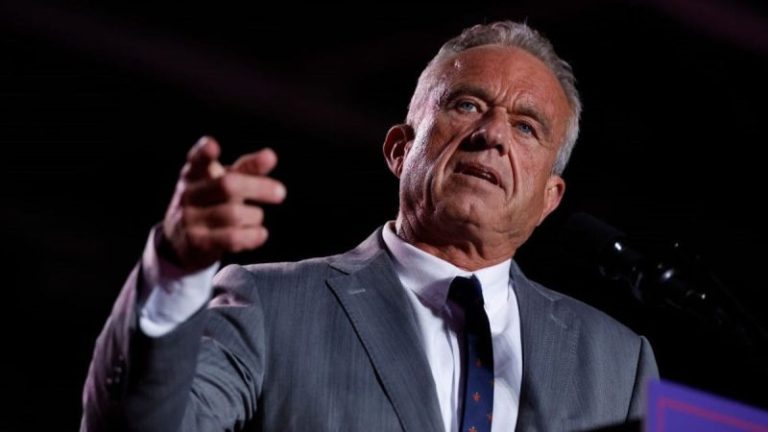
More than 1,000 current and former employees of the Department of Health and Human Services (HHS) signed a letter calling on HHS Secretary Robert F. Kennedy Jr. to resign on Wednesday.
The employees cited Kennedy’s recent ousting of the Centers for Disease Control and Prevention (CDC) director Susan Monarez. They also accused Kennedy of appointing ‘political ideologues’ to positions of authority.
‘We believe health policy should be based in strong, evidence-based principles rather than partisan politics. But under Secretary Kennedy’s leadership, HHS policies are placing the health of all Americans at risk, regardless of their politics,’ the letter says.
‘Should he decline to resign, we call upon the President and U.S. Congress to appoint a new Secretary of Health and Human Services, one whose qualifications and experience ensure that health policy is informed by independent and unbiased peer-reviewed science. We expect those in leadership to act when the health of Americans is at stake,’ the letter continues.
HHS did not immediately respond to a request for comment from Fox News Digital.
The letter comes just days after Sen. Bernie Sanders, I-Vt., also called on Kennedy to resign, citing his actions at the CDC. The Trump administration announced the removal of Monarez last week, less than a month after she was confirmed, after she refused Kennedy’s directives to adopt new limitations on the availability of some vaccines, including for approvals for COVID-19 vaccines.
Four other senior CDC officials resigned in protest after Monarez’s ouster, pointing, in part, to anti-vaccine policies pushed by Kennedy. Hundreds of workers at the agency also walked out of the CDC’s headquarters in Atlanta in support of their former colleagues.
Sanders wrote in an op-ed for The New York Times that Kennedy is ‘endangering the health of the American people now and into the future,’ and accused the secretary of firing Monarez because she refused ‘to act as a rubber stamp for his dangerous policies.’
‘Despite the overwhelming opposition of the medical community, Secretary Kennedy has continued his longstanding crusade against vaccines and his advocacy of conspiracy theories that have been rejected repeatedly by scientific experts,’ Sanders wrote.
‘It is absurd to have to say this in 2025, but vaccines are safe and effective,’ he added. ‘That, of course, is not just my view. Far more important, it is the overwhelming consensus of the medical and scientific communities.’
The Trump administration has defended Monarez’s ouster, with White House press secretary Karoline Leavitt saying Thursday that the president has the ‘authority to fire those who are not aligned with his mission.’
‘The president and Secretary Kennedy are committed to restoring trust and transparency and credibility to the CDC by ensuring their leadership and their decisions are more public-facing, more accountable, strengthening our public health system and restoring it to its core mission of protecting Americans from communicable diseases, investing in innovation to prevent, detect and respond to future threats,’ Leavitt told reporters.
Fox News’ Landon Mion contributed to this report

For decades, Democrats have clung to James Carville’s mantra: ‘It’s the economy, stupid.’ It became the default excuse for every campaign message, every strategy and every setback.
We need to retire that phrase from our political lexicon.
My fellow Democrats forget that Carville’s first rule on his whiteboard in Little Rock wasn’t the economy, stupid. It was ‘Change vs. more of the same.’ Voters still want change — not numbers, not excuses. And if President Donald Trump offers change while Democrats defend the system as it is, Democrats will lose.
Today, my party is jumping onto a shiny substitute considered to be the winning message that unites all — ‘affordability’ — as if the idea that lower prices are better than higher ones is a revelation. Has a candidate ever campaigned on the reverse?
During the Biden administration, consumer costs inflated on our watch, but now we are asking midterm voters to give us the keys back to the car anyway.
When is my party going to learn that politics is about culture and connection, not charts and spreadsheets? It’s about being relevant to the lives of ordinary people, not proving to them that we are right.
Voters aren’t sitting in some academic economics lecture. They don’t care about GDP growth, labor-force participation rates, or the Bureau of Labor Statistics when they feel prices are too high. They don’t want to hear that homicides, robberies and carjackings have decreased according to the latest stats, when they feel unsafe. Sending in the National Guard won’t be a solution to ending crime in our inner cities, but it does make communities feel protected.
Are Democrats so disconnected from reality that we’ve unlearned the most basic political principle of all, that perception and politics go hand-in-glove?
Voters are not looking to be informed by candidates, especially when they sound like human calculators, vomiting out numbers. Being informed isn’t the same as feeling informed and telling voters that how they feel isn’t real, because numbers say otherwise, isn’t a winning message. Shaming Trump voters for their choice last year or lecturing them that this isn’t what they voted for, offends them rather than persuades them. Patronizing voters is not a strategy.
What voters in this midterm election want is some cultural common sense, and to borrow a bullet from the Democratic talking points, Democrats have not been meeting voters where they are — yet.
Voters want to hear us acknowledge that crime is bad and say we need more cops on the street, but not necessarily troops. They want our candidates to give a straight answer and plainly state that boys shouldn’t compete in girls’ sports as a matter of fairness. It’s okay for Democrats to say they believe in merit-based hiring instead of DEI and box-checking quotas.
Most Americans feel this way — and Democrats lose credibility when they dodge these conversations or give evasive answers.
Democrats avoid going where the news and conversations are happening. Our leaders and candidates too often duck and cover. When issues turn culturally sensitive, they play hide and seek. We need to run straight into the culture war fires, not away from them. Those are the conversations voters are having and we need to join them.
My old boss, President Joe Biden, learned this lesson the hard way. Biden’s presidency illustrates this danger for Democrats on the ballot everywhere in 2026. At the very moments when Americans were craving leadership — like a national debate over college campus unrest and violent antisemitism — Biden was absent. Scranton Joe, who built his career on a chip-on-the-shoulder authenticity that connected with ordinary people, became the first non-Ivy League president in decades. Yet, he was silent when he could have drawn the sharpest contrast from the elites.
Biden told Americans the economy was the envy of the world, and then his Baghdad Bobs in the White House told us he was as sharp as ever. Polls said Americans felt otherwise, still his instinct was to retreat further. Voters saw fewer unscripted moments, such as interviews or news conferences, smaller steps off Air Force One and a greater reliance on teleprompters. In a political age where imagery shapes public opinion, Biden looked feeble, distant and disconnected. He followed an outdated media strategy that led him into a political death spiral.
Trump, by contrast, dives headfirst into every news cycle and runs into every cultural fire — from campus protests to celebrity dust-ups like Sydney Sweeney’s jeans or Cracker Barrel’s new logo. He doesn’t hesitate, he doesn’t duck, he doesn’t wait for the perfect poll-tested phrase. Love him or hate him, voters can’t miss that he shows up with an opinion and a position. He doesn’t keep them guessing.
Democrats don’t need to copy Trump’s style. But they do need his guts. If voters are talking about trans athletes, immigration, DEI or crime — and they stay silent or pivot — then they’re absent from the conversations Americans outside the Beltway are having with friends, family and their neighbors. It’s these social conversations that are shaping political identity, not stats and charts.
Voters will tune out any type of hell Democrats try to raise about prices, tariffs or cuts to Medicare if they think we don’t ‘get’ them on culture.
The way out of the wilderness isn’t another slogan about affordability. It’s courage and common sense. Stop hiding behind statistics. Start running into the fire. Only then will Democrats earn back voters’ trust.
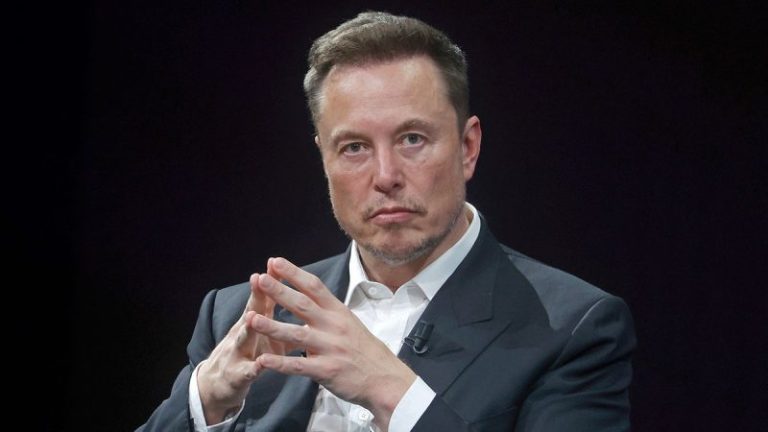
Business magnate Elon Musk suggested that anti-white male propaganda is ‘a major driver of’ members of that demographic adopting transgender identity.
‘My observation is that a major driver of white males becoming trans is the relentless propaganda portraying white men as the worst human beings,’ Musk wrote in a post on X.
‘If those lies land, especially during vulnerable teen years, and they are given an option to be a ‘celebrated’ group, some will do it,’ he added.
Someone responded to Musk’s post by writing, ‘Interesting theory. It may also explain why so many white women support trans mania despite the harm it causes them and their children.’
Musk replied with the 100 emoji, apparently expressing agreement.
One of Musk’s children identifies as transgender.
‘They call it deadnaming for a reason,’ Musk previously said during an interview with Jordan Peterson, saying, ‘my son Xavier is dead, killed by the woke mind virus.’

Alphabet’s Google must share data with rivals to open up competition in online search, a judge in Washington ruled on Tuesday, while rejecting prosecutors’ bid to make the internet giant sell off its popular Chrome browser and Android operating system.
Google CEO Sundar Pichai expressed concerns at trial in the case in April that the data-sharing measures sought by the U.S. Department of Justice could enable Google‘s rivals to reverse-engineer its technology.
Google has said previously that it plans to file an appeal, which means it could take years before the company is required to act on the ruling.
U.S. District Judge Amit Mehta also barred Google from entering into exclusive agreements that would prohibit device makers from preinstalling rival products on new devices.
Google had argued that loosening its agreements with device makers, browser developers and mobile network operators was the only appropriate remedy in the case. Its most recent deals with device makers Samsung Electronics and Motorola and wireless carriers AT&T and Verizon allow them to load rival search offerings, according to documents shown at trial in April.
The ruling results from a five-year legal battle between one of the world’s most profitable companies and its home country, the U.S., where Mehta ruled last year that the company holds an illegal monopoly in online search and related advertising.
At a trial in April, prosecutors argued for far-reaching remedies to restore competition and prevent Google from extending its dominance in search to artificial intelligence.
Google said the proposals would go far beyond what is legally justified and would give away its technology to competitors.
In addition to the case over search, Google is embroiled in litigation over its dominance in other markets.
The company recently said it will continue to fight a ruling requiring it to revamp its app store in a lawsuit won by “Fortnite” maker Epic Games.
And Google is scheduled to go to trial in September to determine remedies in a separate case brought by the Justice Department where a judge found the company holds illegal monopolies in online advertising technology.
The Justice Department’s two cases against Google are part of a larger bipartisan crackdown by the U.S. on Big Tech firms, which began during President Donald Trump’s first term and includes cases against Meta Platforms, Amazon and Apple.
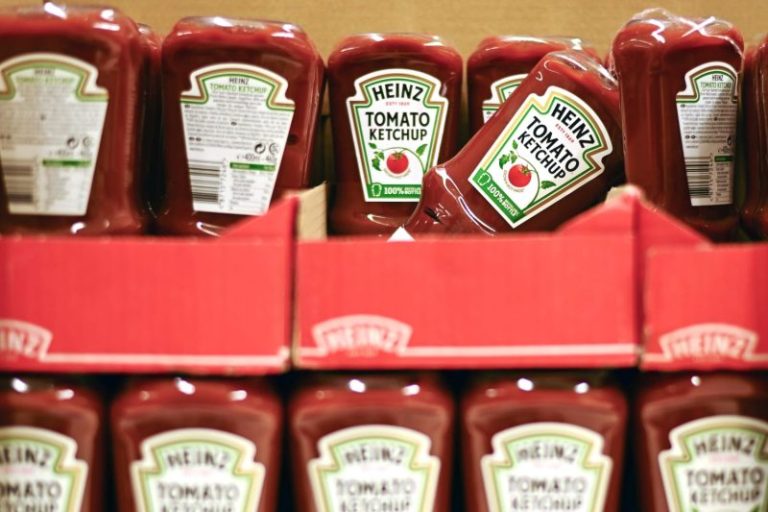
Kraft Heinz will split into two companies, reversing much of the blockbuster $46 billion merger from a decade ago that created one of the biggest food companies in the world.
The first of the two new companies, which are not yet named, will primarily include shelf-stable meals and will be home to brands such as Heinz, Philadelphia and Kraft mac and cheese. Kraft Heinz said that company on its own would have $15.4 billion in 2024 net sales, and approximately 75% of those sales would come from sauces, spreads and seasonings.
Kraft Heinz said the second new company would be a “scaled portfolio of North America staples” and would include items such as Oscar Mayer, Kraft singles and Lunchables. That company will have approximately $10.4 billion in 2024 net sales.
“Kraft Heinz’s brands are iconic and beloved, but the complexity of our current structure makes it challenging to allocate capital effectively, prioritize initiatives and drive scale in our most promising areas,” said Miguel Patricio, executive chair of the board for Kraft Heinz. “By separating into two companies, we can allocate the right level of attention and resources to unlock the potential of each brand to drive better performance and the creation of long-term shareholder value.”
The deal that created Kraft Heinz in 2015 was the brainchild of Warren Buffett’s Berkshire Hathaway and private equity firm 3G Capital. While investors originally cheered the merger, the luster began to fade as the combined company’s U.S. sales faltered.
Then came a disclosure in February 2019 that Kraft Heinz had received a subpoena from the Securities and Exchange Commission related to its accounting policies and internal controls. The company also slashed its dividend by 36% and took a $15.4 billion write-down on Kraft and Oscar Mayer, two of its biggest brands. Days later, Buffett told CNBC that Berkshire Hathaway had overpaid for Kraft.
A leadership shakeup and more write-downs of iconic brands, like Maxwell House and Velveeta, followed. Kraft Heinz also began divesting some of its businesses, selling off most of its cheese unit to French dairy giant Lactalis and its nuts division, including the Planters brand, to Hormel.
In recent quarters, the company has invested in boosting some of its brands, like Lunchables and Capri Sun. Despite turnaround efforts, shares of Kraft Heinz have slid roughly 60% since the merger closed in 2015.
The split comes as more big food companies pursue breakups to divest from slower-growth categories and impress investors again.
In August, Keurig Dr Pepper announced that it will undo the 2018 deal that merged a coffee company with the 7 Up owner. Keurig Dr Pepper plans to separate after it closes its $18 billion acquisition of Dutch coffee company JDE Peet’s. And two years ago, Kellogg spun off its snacks business into Kellanova and renamed itself as WK Kellogg.

In his role as Executive Chairman of Meteoric Resources NL (ASX:MEI), MC ~$370m, he oversaw the transformative acquisition and advancement of the Caldeira ionic clay REE project in Brazil, one of the world’s largest high grade ionic clay rare earth deposits. Mr Burke was actively involved in all aspects of the project’s initial progression, including negotiations with government agencies, local partners and funders.
He is a qualified lawyer, with over 20 years legal and corporate advisory experience. Mr Burke’s legal expertise is in corporate, commercial and securities law. His corporate advisory experience includes identification of acquisition targets, deal structuring and financing and project development.
He has held Board roles across numerous ASX companies, as well as AIM and NASDAQ-listed companies, including Mandrake Resources and Vulcan Energy Resources.
Locksley is entering a significant growth phase as it advances its Mine to Market Strategy. In conjunction with Mr Burke’s appointment, Mr Nathan Lude will transition from Chairman to the newly created role of Head of Strategy, Capital Markets & Commercialisation. This reflects the Company’s focus on advancing its U.S. minerals projects, processing pathways and downstream critical minerals and technology initiatives. In this role Mr Lude will dedicate his time to:
Downstream Technology & Commercialisation
– Coordinating Locksley’s collaboration with Rice University to fast-track antimony extraction, processing and energy storage innovation
– Securing commercial licensing opportunities, pilot site identification, and deployments
– Driving the establishment and contributions of Locksley’s U.S. subsidiary and Advisory Board
Strategic Partnerships & Government Engagement
– Building strategic partnerships and alliances with U.S. defense, energy, and targeted technology sectors
– Coordinating engagement through GreenMet, including submissions to U.S. federal and state government programs and funding opportunities such as the DOE, DoD, and EXIM Bank
Capital Markets & Investor Growth
– Overseeing marketing, investor relations, and public relations
– Coordinating with ASX funds and investors, while expanding the U.S. investor base via OTCQB
– Assessing growth pathways to OTCQX, NASDAQ, SPAC structures, and Frankfurt listing
Mr Lude commented:
‘Locksley has rapidly advanced its growth strategy in recent months, advancing both upstream project development and new downstream opportunities. This change allows me to focus on our Mine to Market initiatives in the U.S., where our projects and partnerships can meaningfully strengthen America’s critical minerals supply chain. With Pat leading the Board, drawing on his experience and success in identifying and advancing the Meteoric REE opportunity and his deep industry knowledge on critical minerals, I can dedicate my time to building the business foundations for Locksley’s next phase of investor growth.’
Mr Burke commented:
‘Locksley’s integrated approach from resource development through to downstream processing and advanced applications is well aligned with the current U.S. focus on secure, strategic critical minerals supply chains. I look forward to working with the Board and management to advance the Company’s portfolio and deliver value for shareholders.’
About Locksley Resources Limited:
Locksley Resources Limited (ASX:LKY) (OTCMKTS:LKYRF) is an ASX-listed explorer focused on critical minerals in the United States of America. The Company is actively advancing exploration across the Mojave Project in California, targeting rare earth elements (REEs) and antimony. Locksley Resources aims to generate shareholder value through strategic exploration, discovery and development of critical minerals for U.S.
Mojave Project
Located in the Mojave Desert, California, the Mojave Project comprises over 240 claims across two contiguous prospect areas, namely, the North Block-Northeast Block and the El Campo Prospect. The North Block directly abuts claims held by MP Materials, while El Campo lies along strike of the Mountain Pass Mine and is enveloped by MP Materials’ claims, highlighting the strong geological continuity and exploration potential of the project area.
In addition to rare earths, the Mojave Project hosts the historic ‘Desert Antimony Mine’, which last operated in 1937. Despite the United States currently having no domestic antimony production, demand for the metal remains high due to its essential role in defense systems, semiconductors, and metal alloys. With surface samples grading up to 46% Sb as well as silver up to 1,022 g/t Ag, the Desert Mine prospect represents one of the highest-grade known antimony occurrences in the U.S.
Locksley’s North American position is further strengthened by rising geopolitical urgency to diversify supply chains away from China, the global leader in both REE & antimony production. With its maiden drilling program planned, the Mojave Project is uniquely positioned to align with U.S. strategic objectives around critical mineral independence and economic security.
Source:
Locksley Resources Limited
Contact:
Nathan Lude
Chairman
Locksley Resources Limited
T: +61 8 9481 0389
News Provided by ABN Newswire via QuoteMedia